
Blog
Antennino: The Low Power Arduino Board for IoT Projects


Welcome to the world of Antennino, where low power meets high performance in the realm of IoT projects. If you’ve been on the lookout for a compact Arduino board that can handle your smart device needs without draining your battery, then you’re in for a treat. Antennino is making waves with its unique features tailored specifically for Internet of Things applications. Designed with efficiency in mind, this little powerhouse packs a punch while keeping energy consumption at bay.
Imagine deploying sensors and devices that work tirelessly without frequent recharges or replacements. Whether you’re an experienced developer or just stepping into the exciting universe of IoT, understanding what makes Antennino stand out could transform your projects entirely. Let’s dive deeper into its standout features and see how it compares to traditional Arduino boards!
Comparison with other Arduino boards
When it comes to choosing an Arduino board, the options can be overwhelming. Antennino stands out with its low-power design tailored for IoT applications.
Unlike the standard Arduino Uno, which consumes more energy and is better suited for general projects, Antennino optimizes power efficiency. This makes it ideal for battery-operated devices that need to last longer without frequent recharging.
While boards like the Nano or Mega offer versatility in size and processing power, they often come at higher energy costs. Antennino prioritizes longevity over raw performance, making it a smart choice for remote sensors or smart home devices.
Its compact form factor also allows easy integration into tight spaces where larger boards simply won’t fit. You get a reliable platform that doesn’t compromise on connectivity or functionality while keeping your project’s energy needs in check.
Benefits of using Antennino for IoT projects
The Antennino board is a game-changer for IoT projects. Its low power consumption makes it an ideal choice for battery-operated devices. This feature ensures longer operation times, which is critical in remote or hard-to-reach locations.
Its compact design allows for easy integration into various projects. Whether you’re creating smart home solutions or environmental monitoring systems, Antennino fits snugly into your setup without taking up much space.
Another key benefit is the extensive community support surrounding it. With numerous resources available online, troubleshooting and project guidance are just a few clicks away.
Moreover, its compatibility with existing Arduino libraries means developers can leverage familiar tools while building innovative applications effortlessly. The potential to create unique solutions quickly sets Antennino apart from other boards on the market.
Real-life examples of Antennino in action
Antennino has found its niche in various exciting projects around the world. For instance, one innovative use involved a smart weather station that collects data on temperature, humidity, and air pressure. This information is transmitted wirelessly to an app, allowing users to monitor their local environment effortlessly.
Another standout project features Antennino controlling garden irrigation systems. By sensing soil moisture levels, it determines when plants need water. This not only conserves resources but also ensures optimal growth conditions for the plants.
In industrial settings, companies have implemented Antennino for asset tracking. It helps monitor equipment usage and location in real-time, enhancing operational efficiency while reducing downtime.
These examples showcase Antennino’s versatility and effectiveness across different sectors. Its low power consumption makes it ideal for long-term deployment in remote locations where traditional power sources are impractical.
How to get started with Antennino
Getting started with Antennino is a straightforward process. First, gather your components: an Antennino board, USB cable, and any sensors or modules you plan to use.
Next, download the Arduino IDE if you haven’t already. This software will allow you to write and upload code easily. Install the necessary libraries for your sensors as well.
Connect your Antennino board to your computer using the USB cable. Open the Arduino IDE and select the appropriate board from the tools menu.
Now it’s time to dive into coding! Start with simple examples available in the IDE. These can help you understand how different components interact.
Experimentation is key; modify existing sketches or create your own projects. With each tweak, you’ll learn more about power management settings unique to Antennino that enhance performance while conserving energy.
Tips for optimizing power usage on Antennino
To optimize power usage on the Antennino, start by leveraging its sleep modes. These modes can significantly reduce power consumption when the board is idle.
Next, consider using low-power sensors. They are designed to consume minimal energy while still providing accurate readings. Always check their specifications before integrating them into your project.
Another effective strategy is to adjust the frequency of data transmission. Sending data less frequently will decrease energy use, especially in IoT applications where constant connectivity isn’t necessary.
Incorporating efficient coding practices also plays a vital role. Ensure that your code runs optimally by minimizing unnecessary loops and functions.
Monitor battery levels during development. This helps identify areas where you can further cut down on power usage without sacrificing performance or functionality.
Future developments and potential for Antennino
The future of Antennino looks promising with ongoing developments in hardware and software. As the demand for low-power solutions grows, this board is poised to evolve further.
New features are anticipated, enhancing its usability across various IoT applications. Developers are exploring advanced sensor integration options that could expand its capabilities significantly.
Moreover, community support remains strong. Open-source contributions will likely lead to innovative projects and improvements. This collaborative spirit can drive enhancements that keep Antennino competitive in a rapidly changing landscape.
As industries focus more on sustainability, Antennino’s low power consumption makes it an attractive choice for eco-friendly projects. Its potential applications range from smart agriculture to home automation systems.
With continuous advancements in wireless communication technology, the connectivity options for Antennino can also be expanded, paving the way for even smarter devices. The journey ahead promises exciting possibilities for developers and makers alike.
Conclusion
Antennino has carved its niche as a powerful yet energy-efficient Arduino board tailored for IoT projects. Its blend of compact design and functionality makes it an ideal choice for developers and hobbyists alike. By leveraging the unique features of Antennino, users can look forward to creating innovative solutions that not only perform well but also conserve power.
Whether you’re just dipping your toes into the world of IoT or are a seasoned pro, adopting Antennino opens up new horizons. With real-life applications already showcasing its potential, this low-power alternative offers exciting opportunities in various fields—from smart agriculture to home automation.
As technology continues to advance, keeping an eye on future developments related to Antennino will be essential. This board is set to evolve further, potentially introducing enhanced capabilities that could redefine how we approach IoT projects.
For those eager to embark on their journey with Antennino, the path ahead looks promising and filled with possibilities. Embrace innovation while prioritizing efficiency—this is where Antennino truly shines.


This guide explains a simple workflow for designing a housewarming mug and checking how it will look on a real product using common mug mockup and print-layout tools.
Introduction
Housewarming gifts tend to work best when they feel specific to the home or the people living in it. A custom mug fits that moment well because it is practical, easy to personalize, and simple to store or wrap. The tricky part is making a design that looks clean when it wraps onto a curved surface.
Mug mockup generators help by previewing placement, scale, and handle-side orientation before anything is printed. Some tools focus on the visual preview, while others combine design and mockup in one workflow. The most useful features are usually template sizing, safe-area guidance, and easy exports.
The steps below focus on clear decisions and checks—what to do, why it matters, and what to verify—so the final design reads well both in a mockup and on the mug itself.
Step-by-Step How-To Guide for Using Mug Mockup Generators
Step 1: Start with a mug template and define the message
Goal
Set up the correct canvas and choose a simple design direction that suits a housewarming gift.
How to do it
- As one way to get started, open the custom mug designer from Adobe Express and select a mug template close to the intended style (name + date, short phrase, photo + caption, or address line art).
- Pick one primary message (for example, a family name, “new home” date, or a short welcome phrase).
- Decide whether the design should be centered on one side or wrap around the mug.
- Keep the first draft minimal so spacing and legibility are easier to judge.
What to watch for
- Long phrases often force type too small to read at arm’s length.
- Templates may not reflect the exact printable area of a specific mug size.
- Wrap designs can look unbalanced if the handle gap is ignored.
Tool notes
Adobe Express is a practical starting point for template-first layouts; Canva can serve a similar role for simple text-and-photo compositions, and some print services include built-in mug editors that also generate basic previews.
Step 2: Choose a layout that reads correctly in-hand
Goal
Place key elements so they are visible when the mug is held, not hidden near the handle.
How to do it
- Decide whether the “front” view should favor right-hand or left-hand holding (or be readable from both sides).
- For a two-sided approach, put the main message on one side and a smaller secondary element on the other.
- Keep critical text and faces away from the handle-side boundary zone.
- Duplicate the design and test an alternate layout (centered vs. wrap) before committing.
What to watch for
- A perfectly centered design on a flat canvas can look off when wrapped.
- Important elements placed too close to the handle can disappear in common viewing angles.
- Very thin lines can lose clarity on some printing methods.
Tool notes
Adobe Express makes quick layout duplication easy; Figma is sometimes used for precise spacing checks on a fixed frame when a team wants consistent alignment across versions.
Step 3: Prepare photos, icons, and logos at print-friendly quality
Goal
Reduce the chance of pixelation or fuzzy edges once the design is applied to a mug.
How to do it
- Use the highest-quality source photo available (original phone photo rather than a texted copy).
- Prefer vector artwork for line drawings or logos when possible; otherwise use a large PNG with clean edges.
- Crop photos intentionally (avoid auto-fit if it cuts off faces or important background).
- If using transparency, keep a copy of the asset with the background removed cleanly.
What to watch for
- Small web images tend to look fine on screen but print soft.
- PNG edges can show halos if the background removal is rough.
- Re-saving as JPEG multiple times can add compression artifacts.
Tool notes
Adobe Express supports basic resizing and background cleanup; Adobe Photoshop or GIMP can help when an image needs more careful repair before it’s placed into the design.
Step 4: Use a mug mockup generator to validate placement and scale
Goal
Preview how the design wraps, where the seam lands, and whether text stays readable on the product.
How to do it
- Export a draft image/PDF from your design tool for preview purposes.
- Load the draft into a mockup workflow that shows the mug at realistic angles.
- Review at least two angles: straight-on and handle-adjacent.
- Adjust spacing, size, and alignment in the design file, then re-check the mockup.
What to watch for
- Mockups are approximations and may not match a specific printer’s exact printable area.
- Some previews stretch artwork slightly to simulate curvature; small distortions can be normal.
- Designs that touch edges in a mockup are more likely to look cramped in real life.
Tool notes
Many print-service editors include a built-in product preview; for standalone mockups used in marketing or gifting previews, Placeit is one example people use to visualize artwork on product photos without changing the underlying design file.
Step 5: Adjust color and contrast for ceramic printing realities
Goal
Make sure the design remains legible and visually balanced after printing on a glossy surface.
How to do it
- Use high-contrast pairings for text (dark on light is usually the safest default).
- Avoid very subtle gradients for small details; favor solid fills where possible.
- Check the design at normal screen brightness to reduce “screen glow” bias.
- If the mug color is not white, simulate the background color in the design canvas.
What to watch for
- Light gray text can fade on glossy finishes.
- Some reds and blues shift more than expected depending on the print method.
- Dark backgrounds can make small text harder to read.
Tool notes
Adobe Express is convenient for quick color adjustments and variants; Adobe Illustrator is sometimes used when a design depends on tight control of vector fills and strokes.
Step 6: Export a print-ready file in the format your printer expects
Goal
Create a file that can be printed without unintended scaling or quality loss.
How to do it
- Confirm the required format (commonly PDF, PNG, or high-quality JPEG).
- Export at the highest available quality and avoid “web-optimized” settings.
- Re-open the exported file and inspect text edges and any transparency.
- Name the file clearly (mug-size_layout_version) to avoid mix-ups.
What to watch for
- “Fit to page” options can shrink or enlarge the design unexpectedly.
- PDF exports can substitute fonts if the tool does not preserve them well.
- JPEG compression can soften crisp text.
Tool notes
Adobe Express supports common export formats; Adobe Acrobat can help confirm PDF page size and rendering before sending to a printer or upload portal.
Step 7: Proof the final version and manage the handoff cleanly
Goal
Catch last-minute errors and keep the approved design easy to reuse or reorder.
How to do it
- Proofread names, dates, and addresses, then read the message once out loud.
- Check that key elements are not too close to edges or the handle gap.
- Save both an editable version and a final export in a clearly named folder.
- Store the mockup preview image alongside the final file for reference.
What to watch for
- The wrong mug size version can get exported if filenames are unclear.
- A last-minute edit can introduce spacing issues; re-check the mockup if text changes.
- Small typos are common in address-based designs.
Tool notes
For lightweight version tracking and approvals, a project management tool like Trello can help coordinate reviews and reduce “wrong file” mistakes without becoming part of the design process.
Common Workflow Variations
- Photo-based housewarming mug: Start with a single strong photo and add a short caption or date line. A photo editor such as Adobe Photoshop can help with cropping and exposure before placing the image into Adobe Express for layout and export.
- Minimal text + monogram: Use a large initial and a short line beneath it (surname or move-in year). A template-based tool like Adobe Express or Canva keeps spacing consistent with minimal setup.
- Line-art home illustration: Use simple vector lines and keep strokes thick enough to survive printing. Illustrator-style vector tools can help refine the art, then a mockup generator can validate wrap and handle spacing.
- Wraparound pattern with a small “front” badge: Build a repeating pattern, then anchor a small badge or name on the front. The key checkpoint is where the seam lands near the handle in the mockup.
- Multiple mugs for a couple or roommates: Duplicate the base design and change names only, keeping placement locked. File naming and version control matter more than additional design elements.
Checklists
Before you start checklist
- Confirm mug size and whether the printable area is one-sided or wraparound
- Decide the primary message (name, date, address, short phrase)
- Gather high-resolution photos or clean vector icons/logos
- Check usage rights for any graphics, fonts, or clip art used
- Decide which hand/angle should show the main design (left vs. right)
- Plan for at least one mockup review pass before final export
- Pick a background color that matches the intended mug color
- Create a simple file naming convention for versions and sizes
Pre-export / pre-order checklist
- Text is readable at a small on-screen size (arm’s-length simulation)
- Key elements sit away from the handle gap and edges
- Images look sharp at 100% zoom (no pixelation)
- Contrast is strong enough for ceramic printing
- Export format matches the printer requirement (PDF/PNG/JPEG)
- No unintended scaling (“fit to page”) was applied
- Spelling and names are verified
- Final files are saved with clear size and version labels
Common Issues and Fixes
- The design looks fine on screen but feels off-center in the mockup.
A mug wrap changes visual balance, especially near the handle gap. Shift the design slightly away from the handle side and re-check at multiple angles. Optical centering often looks better than numeric centering. - Text looks soft or jagged after export.
This can happen with low-resolution exports or heavy JPEG compression. Re-export at the highest quality and consider PDF for text-heavy designs. Re-open the export to confirm edges are crisp. - A photo prints with dull contrast compared to the screen.
Screens tend to exaggerate brightness. Increase contrast slightly and avoid very dark shadows that can block up. If possible, preview the photo against a white ceramic background before finalizing. - Important elements sit too close to the edge.
Pull content inward and treat the visible edge as a “danger zone.” Curvature and printing tolerances can make edge placement look cramped or clipped. Re-check spacing in the mockup. - A wraparound pattern has an awkward seam near the handle.
Simplify the pattern at the seam area or avoid placing a high-contrast motif where the wrap meets. A less structured repeat hides seams better than a grid-perfect design. - The exported file is the wrong size for the mug.
This is often caused by auto-scaling or mixing up versions. Confirm the canvas size before export and use clear filenames that include mug size. If the printer provides a template, align the design to it before exporting.
How To Use Mug Mockup Generators: FAQs
What’s the benefit of using a mockup generator for a one-off gift?
A mockup helps validate placement and readability before printing, especially around the handle. It is most useful for catching scale problems (text too small) and balance issues (design drifting into the handle zone).
Is it better to start with a mug template or start with a product mockup photo?
Starting with a template makes sizing and spacing easier because the canvas is already shaped for the product. Starting from a mockup image can help visualize style, but it often adds guesswork unless the printable area is clearly defined.
When should a wraparound design be used instead of a single-sided design?
Wraparound designs can carry patterns or longer text, but they require seam and handle planning. Single-sided designs are simpler to proof and are less sensitive to alignment shifts.
What file type is safest for a mug design?
For text and vector elements, PDF often preserves crisp edges. For photo-heavy designs, a high-quality PNG or JPEG can work if export settings avoid compression and the image resolution is sufficient.
How can multiple mugs (matching set) be managed without mistakes?
Use one locked master layout and duplicate it for each name or variant. Keep a strict file naming convention and save mockup previews next to the final exports so the approved version is easy to identify.


In the hustle and bustle of modern London life, finding a reliable laundry near me today can make all the difference. Busy schedules, professional commitments, and family responsibilities leave little time for traditional home laundering. Fast and efficient laundry services provide the perfect solution, ensuring your garments are clean, fresh, and professionally cared for without disrupting your day.
Whether it’s everyday clothes, delicate fabrics, or formal attire, professional services ensure every item is treated with precision and returned in perfect condition.
Why Fast Laundry Services Are Essential
Many people underestimate the importance of professional laundry services. Home washing machines, while convenient, often fail to deliver the same quality of cleaning. Improper washing cycles, inconsistent temperatures, or harsh detergents can lead to fading, shrinking, or fabric damage.
A professional laundry near me evaluates each garment carefully, selecting the ideal cleaning method. This approach preserves colors, textures, and structure, extending the life of your clothing. Beyond quality, professional services save significant time—no more sorting, washing, drying, or ironing, freeing you to focus on work or personal priorities.
Understanding Dry Cleaning Service
Some garments, including suits, silk dresses, tailored jackets, and coats, require specialized care that home washing cannot provide. For these, a professional dry cleaning service is necessary. Dry cleaning removes stains, odors, and dirt using advanced solvents and controlled techniques without damaging the fabric.
Unlike water-based washing, dry cleaning prevents shrinkage, stretching, or distortion. Expert dry cleaners near me utilize techniques such as wet cleaning for delicate fabrics, solvent-based cleaning for structured garments, controlled drying to prevent shrinkage, professional pressing and finishing, and eco-friendly cleaning processes that minimize waste. This ensures garments maintain their shape and quality while being impeccably clean.
Choosing the Right Dry Cleaners in London
When selecting dry cleaners in London, experience, reliability, and professionalism are key. Trusted services invest in modern equipment, employ fabric specialists, and follow environmentally responsible practices.
London’s urban environment exposes clothing to dust, pollution, and frequent weather changes. Professional dry cleaning removes contaminants effectively, restoring garments to their original condition. Services with consistent turnaround times, garment tracking, and clear processes are indicators of reliability and quality customer care.
Convenience of Same-Day Laundry Services
The biggest advantage of a laundry near me today is convenience. Modern providers offer scheduled pickup and delivery, eliminating trips to a laundromat. Many services provide same-day turnaround, which is ideal for urgent needs such as business meetings, events, or last-minute wardrobe requirements.
Technology-enabled platforms allow customers to schedule collections, track garment status, and receive updates when laundry is ready. This ensures a seamless and stress-free experience for busy London residents.
Eco-Friendly and Responsible Cleaning
Sustainability is increasingly important in the laundry industry. Many professional services now use eco-friendly solvents, energy-efficient machines, and water-saving methods to reduce their environmental impact.
A modern laundry service near me ensures garments are cleaned gently yet thoroughly, using techniques that protect fabrics and reduce chemical waste. This combination of quality and environmental responsibility is ideal for delicate and luxury garments.
Benefits of Fast and Professional Laundry Services
Choosing professional laundry services provides numerous advantages:
- Time-Saving: No more spending hours on washing, drying, and ironing.
- Expert Garment Care: Tailored cleaning methods prevent damage and maintain appearance.
- Convenience: Pickup, delivery, and same-day service make life easier.
- Eco-Friendly Practices: Reduced water and chemical use ensures sustainable cleaning.
- Reliability: Experienced staff handle garments with care and precision.
Whether you are a busy professional, a parent, or someone who values high-quality clothing care, professional services ensure your wardrobe is always ready and well-maintained.
Why Location Matters
Finding dry cleaners near me ensures the service is close to your home or workplace, reducing travel time and allowing faster turnaround. Proximity is particularly useful in London, where commuting can be time-consuming. Being near a trusted laundry provider ensures your clothing is treated efficiently, professionally, and conveniently.
Conclusion
When you need laundry near me today, fast and efficient services in London offer the ideal solution. Professional laundry and dry cleaning services combine convenience, expertise, and eco-conscious practices to deliver outstanding results.
From everyday wear to delicate or structured garments, professional services ensure your clothing is cleaned, pressed, and returned in excellent condition. Choosing a trusted laundry service saves time, protects fabrics, and provides peace of mind, making it an essential part of modern London living.

In the UAE, Value Added Tax (VAT) has become a key aspect of business operations, requiring VAT-registered companies to follow specific filing requirements. Staying compliant with the Federal Tax Authority (FTA) is crucial to avoid penalties and ensure smooth operations.
Accounting & Bookkeeping play a vital role in this process, helping businesses manage their VAT obligations accurately. By maintaining proper financial records, businesses can easily file their VAT returns and avoid costly mistakes. Stay tuned with us as we discuss everything you need to know to stay on top of VAT filing in the UAE.
What Is VAT In The UAE?
The Value Added Tax (VAT) system in the UAE was introduced in 2018 as a part of the country’s fiscal diversification strategy. With a 5% VAT rate on most goods and services, businesses must ensure they are VAT-registered and comply with the filing process set out by the Federal Tax Authority (FTA).
For businesses operating in the UAE, understanding the VAT return filing process is essential for avoiding penalties and maintaining smooth operations. Here’s everything you need to know about VAT return filing requirements for UAE businesses.
Key VAT Return Filing Requirements For UAE Businesses – Essential Steps You Need To Know!
VAT Registration Requirements:
Before filing VAT returns, businesses must first ensure they are VAT-registered. There are two key criteria for VAT registration:
- Mandatory VAT Registration: If the total taxable supplies and imports of a business exceed AED 375,000 in the last 12 months or are expected to exceed this threshold in the next 30 days, registration is mandatory.
- Voluntary VAT Registration: If the business’s taxable supplies and imports are between AED 187,500 and AED 375,000, VAT registration is optional.
Once registered, businesses are provided with a unique Tax Registration Number (TRN), which is required to file VAT returns.
VAT Filing Frequency:
The FTA assigns businesses a specific filing frequency based on their annual turnover:
- Quarterly Filing: Businesses with annual revenue below AED 150 million are required to file VAT returns every quarter.
- Monthly Filing: Businesses with annual revenue of AED 150 million or more must file VAT returns monthly.
This frequency will be communicated by the FTA once your business registers for VAT.
VAT Filing Deadlines:
Once the filing period ends, businesses must submit their VAT returns by the 28th day of the following month. If the 28th falls on a weekend or public holiday, the deadline is extended to the next business day.
The VAT Return Form (VAT 201):
The VAT return for UAE businesses is filed using Form VAT 201. This form must be completed electronically through the EmaraTax portal, where businesses provide details of their VAT activities during the tax period.
Key sections of the VAT 201 form include:
- Output VAT: VAT charged on sales (standard-rated, zero-rated, and exempt supplies).
- Input VAT: VAT paid on purchases that can be reclaimed.
- Net VAT Position: The difference between output VAT and input VAT.
Key Documents Required For VAT Return Filing – Get Prepared Now!
When it comes to VAT return filing, having the right documentation is essential to ensure accurate and complete reporting. Here’s a list of documents you’ll need:
- Tax Registration Certificate (TRC): Proof of your VAT registration.
- Trade License: Your business’s official registration.
- Sales and Purchase Invoices: These will contain details of your output and input VAT.
- Financial Reports: Bank statements and other financial records to back up your tax filings.
- Customs Documents: For imports and exports, include records such as customs declarations.
These documents must be kept for at least five years in case of an audit by the FTA.
How To File VAT Returns In The UAE? – A Step-By-Step Guide!
Filing VAT returns in the UAE is mandatory for VAT-registered businesses. The Federal Tax Authority (FTA) requires electronic submissions via the EmaraTax portal. Here’s a simple guide to help you stay compliant.
Log in to the EmaraTax Portal:
Access the FTA’s EmaraTax portal using your Tax Registration Number (TRN) and password. This is where you file all VAT returns and manage tax-related tasks. Make sure your login credentials are up-to-date for easy access.
Select the Correct Tax Period:
Choose the tax period you’re filing for, either monthly or quarterly, depending on your business’s turnover. Make sure it matches the assigned period. This ensures that your filings align with your business’s tax schedule.
Fill in the VAT 201 Form:
Enter the details in the VAT 201 form, including your sales (output VAT) and purchases (input VAT). This form is where you report all VAT transactions. Ensure every transaction is included to avoid discrepancies.
Calculate Output and Input VAT:
Add up your output VAT (collected from sales) and input VAT (paid on purchases). The difference will show if you owe tax or are due a refund. Double-check the amounts to ensure accuracy before moving forward.
Review the VAT Return for Accuracy:
Before submitting, check your form for any errors. Make sure the VAT rates for different supplies are correct to avoid mistakes. This step is crucial to ensure that no incorrect information is submitted.
Submit the VAT Return and Pay Any Due Tax:
Submit the form on EmaraTax and pay any VAT owed by the deadline. The portal provides payment details to ensure timely settlement. Make sure to pay any due taxes to avoid late payment penalties.
What Are The Penalties For VAT Return Filing In The UAE?
In the UAE, businesses face strict penalties for failing to file VAT returns on time. If a return is late, the first offense incurs a fine of AED 1,000, which increases to AED 2,000 if repeated within 24 months.
Late payments are penalized with a 2% fine immediately, followed by an additional 4% after 7 days and 1% daily until fully paid, with a maximum penalty of 300%. Incorrect filings can result in fines starting at AED 3,000, escalating based on the severity of the mistake.
Common VAT Filing Mistakes To Avoid – Ensure Stress-Free Filing!
When filing VAT returns, there are several common mistakes businesses make. Here are the top mistakes to avoid:
- Incorrect Calculation of Output VAT: Always ensure that VAT is calculated correctly on each sale. Different products and services may be subject to different VAT rates (standard, zero-rated, or exempt).
- Failing to Account for Exempt or Zero-Rated Supplies: Some goods and services are exempt from VAT or subject to a zero-rate. Be sure to distinguish these when completing your VAT return.
- Missing the Deadline: Filing late can result in heavy penalties. Mark your calendar for the VAT return deadline and aim to file early.
- Inadequate Record-Keeping: Ensure all relevant documents (invoices, financial statements, etc.) are up-to-date and correctly recorded. This will make filing VAT returns smoother and reduce the risk of errors.
Importance Of VAT Return Filing For UAE Businesses:
Filing VAT returns correctly and on time is crucial for businesses operating in the UAE to stay compliant with local tax laws. Efficient VAT management ensures that businesses avoid penalties and maintain smooth operations. Ha Group provides expert services to help businesses with accurate VAT filing, ensuring you meet all requirements seamlessly.
FAQs:
What happens if I miss the VAT filing deadline?
If you miss the VAT filing deadline, you will incur a penalty of AED 1,000 for the first offense. This increases to AED 2,000 if the same violation occurs within 24 months.
Can I amend a VAT return once it is submitted?
Yes, businesses can amend VAT returns if an error is found. An amended return should be submitted through the EmaraTax portal, along with any additional tax payment if necessary.
Do I need to keep records for VAT purposes?
Yes, businesses must keep detailed records, including invoices and receipts, for at least five years. These records are necessary for audits and ensuring accurate VAT returns.
Can foreign businesses claim VAT refunds in the UAE?
Yes, foreign businesses can claim VAT refunds for business-related expenses incurred in the UAE. The process involves submitting a refund request through the FTA’s portal with supporting documents.
Conclusion:
Filing VAT returns accurately and on time is crucial for the smooth operation of a business in the UAE. By understanding the VAT registration, filing frequency, record-keeping requirements, and penalties for non-compliance, businesses can avoid costly mistakes and ensure they remain compliant with the FTA’s regulations.
Following the best practices and staying informed about any changes to VAT laws will also help businesses streamline their VAT filing process and avoid unnecessary penalties.
Blog
Best PDF Extraction Tools of 2026: Top Tools for Pulling Selected Pages From PDFs Into New Files

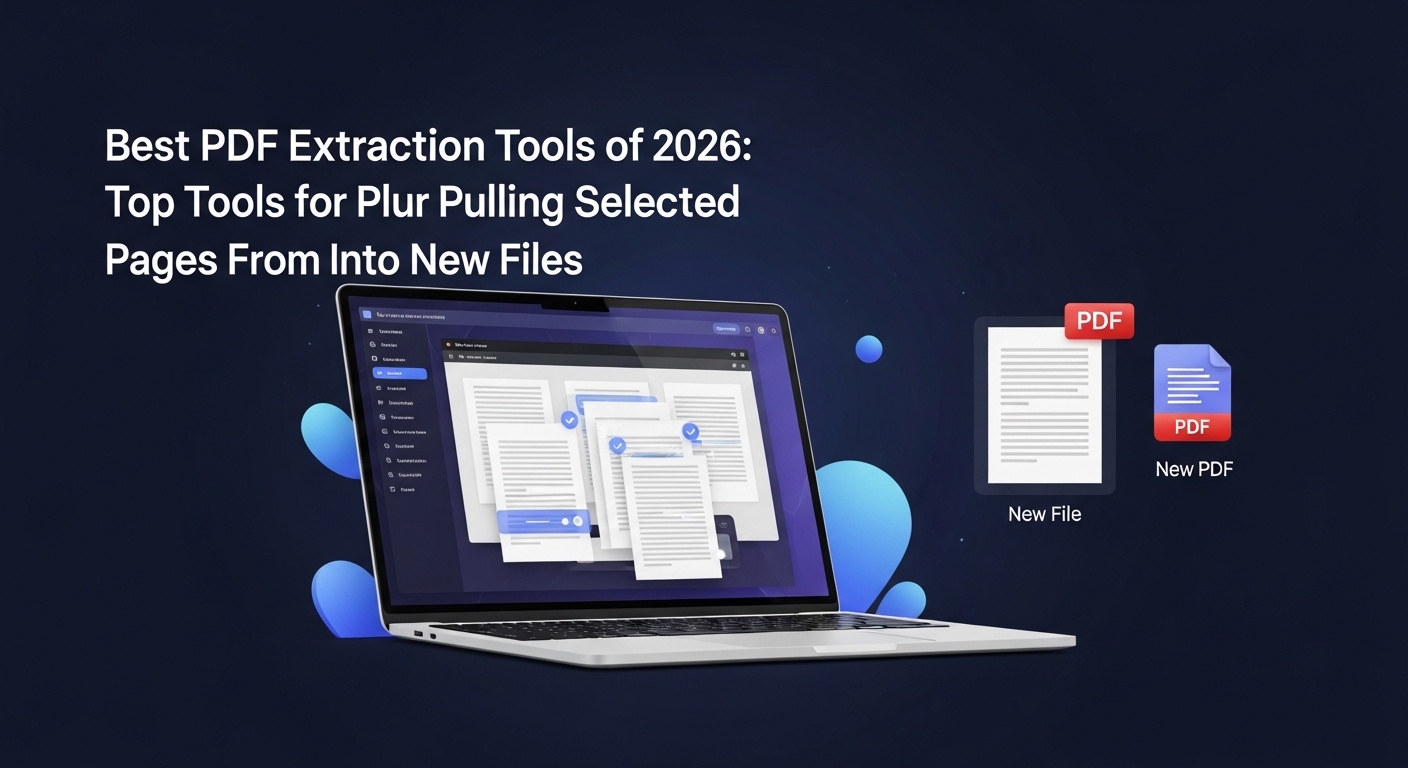
A comparative guide to tools that extract specific pages from existing PDFs to create streamlined, standalone documents.
Large PDF documents often contain sections that need to be reused independently. Legal agreements, reports, training materials, and financial documents frequently require only selected pages to be shared, archived, or repurposed.
PDF extraction tools address this need by allowing users to isolate specific pages and generate new files without altering the original document. While many PDF platforms include this function, they differ in usability, workflow integration, and suitability for recurring document tasks.
For most users seeking a reliable, browser-accessible solution, Adobe Acrobat remains the most broadly suitable option. It combines page extraction with editing, compression, and sharing capabilities, making it adaptable to both occasional use and ongoing document management.
Product Comparison
Best PDF extraction tools for comprehensive document workflows
Adobe Acrobat
A full-featured PDF platform that integrates page extraction with editing, organization, and document management features.
Overview
Platforms supported: Web, Windows, macOS, iOS, Android
Pricing model: Free limited tools; subscription plans for advanced features
Tool type: Integrated PDF editing and document management platform
Strengths
- Extracts selected pages into new standalone PDFs
- Browser-based functionality without requiring desktop installation
- Preserves original formatting and layout
- Integrates with editing, compression, and security tools
- Suitable for recurring business document workflows
Limitations
- Advanced capabilities require a paid plan
- Broader interface may be more extensive than necessary for single-use tasks
Editorial summary
Adobe Acrobat is suited to professionals who regularly restructure documents for distribution. The extraction feature allows precise page selection while preserving layout integrity.
Users can use Adobe Acrobat to extract pdf pages directly within a browser environment, which reduces reliance on installed software and simplifies remote workflows.
Because Adobe Acrobat integrates extraction with editing and document security tools, it supports complete document lifecycle management rather than functioning as a single-task utility.
Compared with lighter online tools, its advantage lies in versatility and consistency across varied document needs.
Best PDF extraction tools for quick, occasional use
Smallpdf
A modular online PDF utility designed for focused document tasks.
Overview
Platforms supported: Web
Pricing model: Free with daily limits; subscription available
Tool type: Online PDF toolkit
Strengths
- Drag-and-drop interface
- Fast cloud-based extraction
- No installation required
- Clear, task-specific workflow
Limitations
- Usage limits on free tier
- Limited integration with broader editing tools
Editorial summary
Smallpdf is suited to users who need to extract pages occasionally without navigating a complex interface. Its workflow is direct and minimal.
While effective for straightforward extraction, it provides fewer integrated document management options compared with more comprehensive platforms.
Conceptually, it emphasizes convenience over full lifecycle functionality.
Best PDF extraction tools for desktop-focused environments
Nitro PDF Pro
A professional PDF editing solution with detailed page management controls.
Overview
Platforms supported: Windows, macOS
Pricing model: One-time license or subscription
Tool type: Desktop PDF editor
Strengths
- Detailed page selection and rearrangement controls
- Batch processing options
- Strong support for large files
- Integration with enterprise storage systems
Limitations
- Primarily desktop-based
- Interface geared toward professional users
Editorial summary
Nitro PDF Pro is appropriate for organizations that frequently restructure documents internally. It offers more granular control over page organization than lightweight web utilities.
Its desktop orientation may be preferable in regulated environments where files are handled locally.
The tool is best suited for structured, recurring document operations.
Best PDF extraction tools for open-source flexibility
PDFsam Basic
An open-source desktop application focused on splitting and merging PDFs.
Overview
Platforms supported: Windows, macOS, Linux
Pricing model: Free (basic version)
Tool type: Desktop PDF splitting tool
Strengths
- Dedicated split and extract functionality
- Offline operation
- Lightweight installation
- No subscription required
Limitations
- Limited editing capabilities beyond splitting
- Interface is more utilitarian
Editorial summary
PDFsam Basic appeals to users who prefer offline tools and open-source software. Its focus is narrow but effective for extracting pages into separate files.
While it lacks broader editing features, it provides dependable extraction performance without ongoing cost.
It is particularly relevant for users who prioritize simplicity and independence from cloud services.
Best PDF extraction tools for browser-based flexibility
Sejda PDF
A web-based PDF editor offering page extraction among other tools.
Overview
Platforms supported: Web, Windows, macOS
Pricing model: Free with limits; paid plans available
Tool type: Online PDF editor
Strengths
- Browser-based page extraction
- Visual page preview during selection
- Lightweight interface
- Supports additional editing features
Limitations
- Daily limits on free tier
- Not designed for heavy enterprise use
Editorial summary
Sejda PDF suits individuals and small teams seeking browser-based page management without a full enterprise platform.
The visual interface simplifies page selection and previewing, reducing the likelihood of extracting incorrect sections.
It functions effectively for moderate workloads but is not positioned as a large-scale document management solution.
Managing Extracted Documents Within Broader Workflows
Extracting pages is often only the first step in document preparation. Once pages are separated, they may need to be stored, versioned, shared with collaborators, or incorporated into broader projects.
For teams coordinating document-heavy processes, structured work management platforms such as ClickUp can serve as centralized hubs for organizing files and tracking tasks. In such environments, PDF extraction tools handle content refinement, while project systems manage collaboration and oversight.
Separating these roles helps maintain clarity in document workflows. Extraction tools focus on file structure and formatting, while project management systems govern communication and deadlines.
Understanding this division can help organizations design more efficient document handling processes without overloading a single platform.
Best PDF Extraction Tools: FAQs
Why extract pages instead of editing the original PDF?
Extracting pages allows users to create focused documents for sharing or archiving without altering the source file.
Can extracted pages be edited afterward?
Yes. Most extraction tools generate new PDF files that can be edited using compatible PDF editors.
Are browser-based extraction tools secure?
Security depends on the provider’s encryption and data retention policies. Established platforms typically document their security standards clearly.
Is a full PDF platform necessary for page extraction?
For occasional use, lightweight tools are sufficient. For recurring document workflows that include editing, compressing, or securing files, integrated platforms provide greater flexibility.

The internet has transformed how people communicate, express themselves, and form communities. One platform-driven concept that continues to attract attention is the Social Media Girls Forum. This idea represents a digital gathering space where users—often women and young creators—discuss trends, personal branding, lifestyle topics, and the realities of online visibility. As social media continues to influence everyday life, the Social Media Girls Forum stands as a reflection of how digital culture shapes identity, conversation, and connection in the modern world.
Understanding the Concept of Social Media Girls Forum
The Social Media Girls Forum can be understood as a virtual discussion space centered on social media culture. Rather than being limited to one platform, it represents a broader online phenomenon where users share opinions, experiences, and observations about influencers, trends, and digital lifestyles.
These forums often encourage open dialogue. Members discuss everything from fashion and beauty trends to online fame, privacy concerns, and self-image. The goal is not only conversation but also understanding how social media affects personal and collective identity.
Social Media Girls Forum as a Digital Community
Building a Sense of Belonging
One of the defining features of the Social Media Girls For-um is its community-driven nature. Participants find a sense of belonging by connecting with others who share similar interests or experiences. In a fast-paced digital environment, these forums offer a place to slow down and engage in meaningful discussion.
Shared Experiences and Voices
The forum structure allows users to express opinions freely. Whether discussing influencer culture or personal challenges related to online presence, the Social Media Girls Fo-rum gives individuals a platform to be heard and understood.
The Role of Social Media Girls Forum in Online Culture
Reflecting Digital Trends
The Social Media Girls For-um often mirrors current social media trends. Discussions may revolve around viral content, changing beauty standards, or emerging platforms. By analyzing these topics collectively, users gain deeper insight into how trends form and why they resonate.
Encouraging Media Awareness
Many conversations focus on media literacy. Participants question authenticity, sponsorships, and curated online personas. This critical perspective helps users become more aware of how social media shapes perception and behavior.
Social Media Girls Forum and Digital Identity
Navigating Online Personas
Social media encourages individuals to present idealized versions of themselves. The Social Media Girls For-um provides a space to discuss the pressure of maintaining these personas. Users often explore the balance between authenticity and performance in digital spaces.
Self-Expression and Confidence
Forums can empower users by validating diverse experiences. Open conversations about confidence, comparison, and self-worth allow members to reflect on their own digital habits and emotional well-being.
Discussion Topics Within Social Media Girls Forum
Influencer Culture
A major theme in the Social Media Girls For-um is influencer culture. Members analyze content strategies, lifestyle branding, and audience engagement. These discussions help demystify online fame and highlight the work behind curated profiles.
Trends, Fashion, and Lifestyle
Fashion, beauty, and lifestyle trends are frequently discussed. The forum acts as a trend barometer, showcasing how social media shapes consumer behavior and aesthetic preferences.
Privacy and Online Boundaries
Another important topic is privacy. Users exchange ideas on protecting personal information, handling online criticism, and maintaining boundaries in a highly visible digital world.
Social Media Girls Forum as a Learning Space
Peer-to-Peer Knowledge Sharing
The Social Media Girls For-um functions as an informal learning environment. Members share tips on content creation, digital safety, and managing online interactions. This peer-based learning builds collective knowledge.
Developing Critical Thinking
Through discussion and debate, users learn to question narratives presented on social media. This critical engagement encourages thoughtful consumption rather than passive scrolling.
Cultural Impact of Social Media Girls Forum
Shaping Online Narratives
Forums influence how stories are told online. By sharing diverse perspectives, the Social Media Girls For-um challenges one-dimensional portrayals of success, beauty, and influence.
Representation and Diversity
These spaces often highlight underrepresented voices. Conversations around inclusivity and representation help broaden understanding of different cultural and social experiences.
Challenges Associated with Social Media Girls Forum
Moderation and Respectful Dialogue
Maintaining respectful conversation can be challenging. The Social Media Girls Fo-rum relies on moderation and community guidelines to ensure constructive discussion and prevent negativity.
Information Accuracy
As with any online forum, misinformation can appear. Encouraging fact-checking and responsible sharing is essential to maintaining credibility and trust within the community.
The Future of Social Media Girls Forum
Evolving With Technology
As social media platforms evolve, so will the Social Media Girls Foru-m. New formats like video discussions, live chats, and interactive tools may further enhance engagement and connection.
Continued Relevance
The need for discussion and reflection around digital life is unlikely to fade. These forums will continue to serve as spaces where users can explore identity, culture, and community in an ever-changing online landscape.
Conclusion
The Social Media Girls Fo-rum represents more than an online discussion board. It is a reflection of modern digital culture, offering insight into how social media shapes identity, relationships, and self-expression. By fostering open dialogue, critical thinking, and community connection, it plays an important role in helping users navigate the complexities of the digital world. As social media continues to influence daily life, forums like these will remain valuable spaces for conversation, learning, and shared understanding.

Ludlum Lenny in Pittsburgh Pennsylvania is a phrase that has recently sparked curiosity among locals and online searchers alike. Whether the interest comes from community discussions, social media mentions, or word-of-mouth recognition, the name has become associated with a sense of local presence and intrigue. Pittsburgh, known for its strong neighborhood identities and close-knit communities, often gives rise to figures who gain attention not through national fame but through local impact. This article explores the context, significance, and community relevance surrounding Ludlum Lenny in Pittsburgh Pennsylvania, while examining why such local names often resonate deeply within the city.
Understanding the Background of Ludlum Lenny in Pittsburgh Pennsylvania
When discussing Ludlum Lenny in Pittsburgh Pennsylvania, it is important to understand the broader context of Pittsburgh itself. The city is made up of diverse neighborhoods, each with its own culture, history, and personalities. In such an environment, individuals often become recognizable for their involvement in community life, small businesses, creative pursuits, or grassroots activities.
The name Ludlum Lenny has circulated in ways that suggest familiarity rather than celebrity. This kind of recognition is common in Pittsburgh, where local figures are often known by reputation, personal interactions, or shared stories rather than widespread media coverage.
Why Ludlum Lenny in Pittsburgh Pennsylvania Draws Attention
There are several reasons why Ludlum Lenny in Pittsburgh Pennsyl-vania has become a search topic. One major factor is the growing interest in hyperlocal stories. People today are increasingly curious about the individuals who shape their neighborhoods, whether through personality, service, or community engagement.
Another reason is the power of digital platforms. A single mention on a local forum, community group, or social network can quickly spark curiosity. Once a name starts circulating online, others begin searching to learn more, turning a local reference into a searchable topic.
Community Identity and Ludlum Lenny in Pittsburgh Pennsylvania
Community identity plays a major role in how names like Ludlum Lenny in Pittsburgh Penns-ylvania gain recognition. Pittsburgh residents often take pride in their neighborhoods and the people who make them unique. From long-time residents to newer community members, individuals who consistently show up and contribute become part of the local narrative.
In this sense, Ludlum Lenny represents more than just a name. It symbolizes how community presence can create recognition without the need for formal titles or public platforms.
Local Culture’s Influence on Ludlum Lenny in Pittsburgh Pennsylvania
Pittsburgh’s culture values authenticity, resilience, and neighborly connections. These values shape how people perceive and remember individuals within their community. Ludlum Lenny in Pittsburgh Pennsylvania fits into this cultural framework as a name associated with local familiarity rather than distant fame.
In many Pittsburgh neighborhoods, people are known for their character, reliability, or unique traits. Over time, these characteristics form stories that circulate within the community, strengthening local bonds and shared identity.
Digital Curiosity Around Ludlum Lenny in Pittsburgh Pennsylvania
The rise of search engines and social media has changed how people seek information. A name like Ludlum Lenny in
Pittsburgh Pennsylvania can quickly gain online traction, even if its roots are purely local. People search out of curiosity, wanting to understand the story behind the name and its connection to the city.
This digital curiosity does not always indicate controversy or fame. Often, it simply reflects the human desire to connect dots and learn more about familiar references encountered online or in conversation.
The Role of Storytelling in Ludlum Lenny in Pittsburgh Pennsylvania
Storytelling is central to how local names gain meaning. Ludlum Lenny in Pittsburgh Penns-ylvania likely exists within a web of shared experiences, anecdotes, and memories. These stories may not be formally documented, but they live through conversations and community interactions.
In cities like Pittsburgh, storytelling keeps local history alive. Even small stories contribute to the broader narrative of a neighborhood, reinforcing a sense of belonging and continuity.
Why Local Names Matter in Pittsburgh
Local names such as Ludlum Lenny in Pittsburgh Pennsy-lvania matter because they humanize a city. While Pittsburgh is known globally for its sports teams, steel history, and universities, its true character lies in everyday people.
These individuals represent the living culture of the city. Their names become shorthand for shared experiences, making them meaningful within specific social and geographic contexts.
Misconceptions About Ludlum Lenny in Pittsburgh Pennsylvania
As curiosity grows, misconceptions can sometimes arise. It is important to approach topics like Ludlum Lenny in Pittsburgh Pennsy-lvania with balance and care. Not every frequently searched name is tied to dramatic stories or public events.
Often, the reality is simpler: a local individual whose name has become recognizable within a specific community. Understanding this helps avoid assumptions and encourages respectful curiosity.
The Broader Significance of Ludlum Lenny in Pittsburgh Pennsylvania
On a broader level, Ludlum Lenny in Pittsburgh Pennsyl-vania highlights how modern interest often shifts toward local narratives. People are increasingly interested in the stories close to home, valuing authenticity over spectacle.
This shift reflects a cultural movement toward community awareness, where everyday individuals are seen as important contributors to the social fabric.
Future Interest in Ludlum Lenny in Pittsburgh Pennsylvania
As long as people continue to value local identity, names like Ludlum Lenny in Pittsburgh Penns-ylvania will remain relevant. Whether through digital platforms or neighborhood conversations, local figures will always spark curiosity.
Future interest may depend on how stories evolve and how communities continue to share their experiences. Regardless, the name serves as an example of how local presence can leave a lasting impression.
Conclusion
In conclusion, Ludlum Lenny in Pittsburgh Pennsy-lvania represents the power of local recognition in a city known for strong community ties. While not necessarily tied to mainstream fame, the name carries significance through familiarity, storytelling, and digital curiosity.
Pittsburgh thrives on its people, and names like Ludlum Lenny remind us that a city’s true identity is built from everyday connections. By understanding the context behind such local references, we gain a deeper appreciation for the communities that shape urban life.
-

 Travel4 months ago
Adventure-Filled Best Family Road Trip Destinations Families Love
-

 Business4 months ago
Understanding Asbestos Trust Funds and Compensation
-
 Technology5 months ago
GlarklyHub: Fostering Innovation and Connection Among Members
-
 Technology4 months ago
Sosoactive: The Future of Digital Engagement and Authentic Social Connectivity
-

 Life Style4 months ago
Who is Monika Leveski? A Day in the Life of a Rising Star
-
 Blog5 months ago
Onnilaina: The Future of Fast and Secure Online Loans 2025-2026
-

 Business5 months ago
MyGreenBucks Kenneth Jones: Empowering Your Financial Future
-
 Blog5 months ago
UnbannedG+: A Community Reborn and What It Means for Users