Health
Calisthenics Workout Plan: The Complete Guide

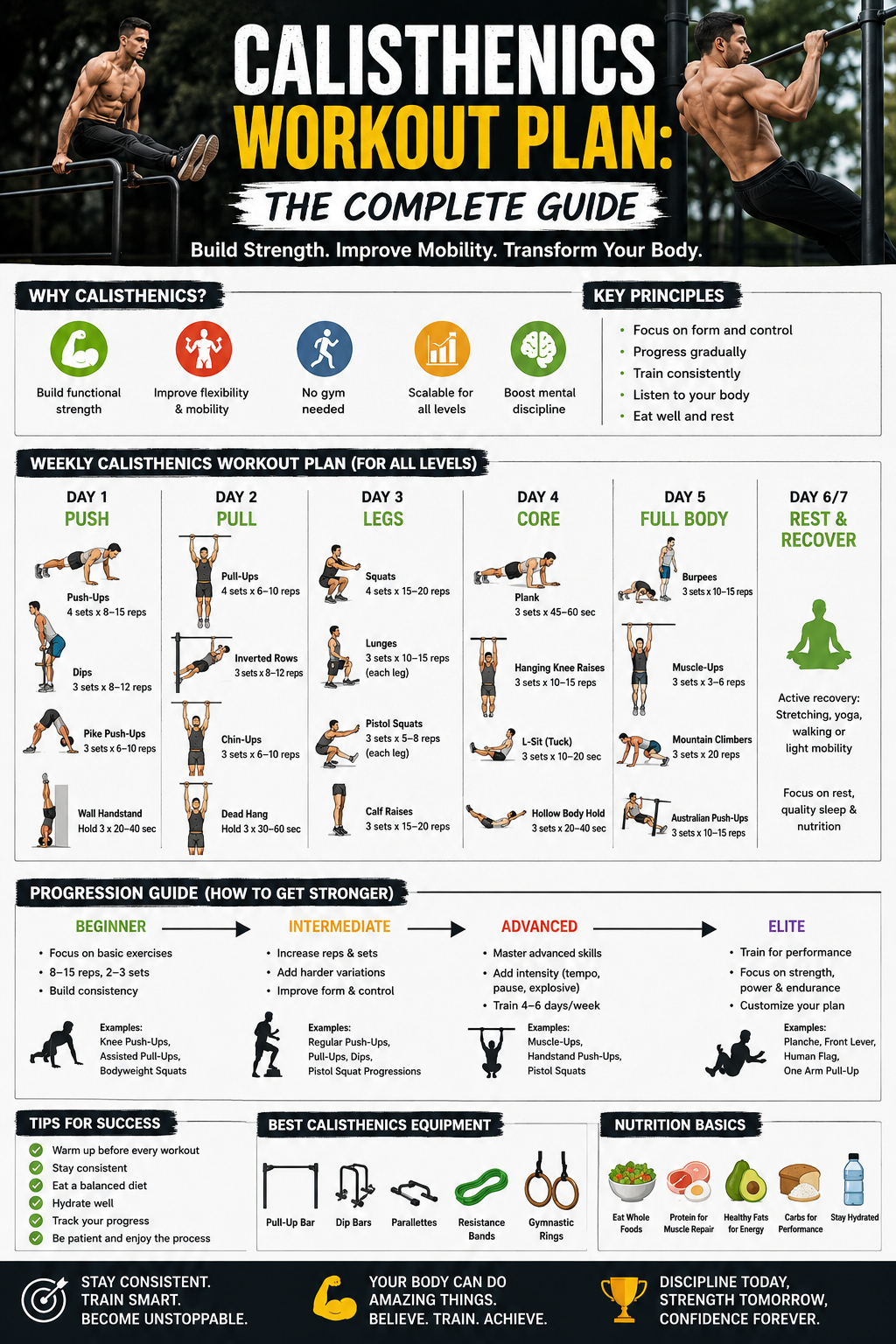
A well-designed calisthenics workout plan is one of the most effective ways to build strength, improve mobility, and develop lean muscle using your own body weight. Unlike traditional weightlifting, calisthenics emphasizes natural movement patterns that enhance coordination, balance, flexibility, and functional fitness.
Whether your goal is to gain muscle, lose fat, improve athletic performance, or simply become healthier, calisthenics offers a flexible and affordable training method. You don’t need an expensive gym membership or advanced equipment—just consistency, proper technique, and a structured workout plan.
One of the biggest advantages of calisthenics is its scalability. Beginners can start with basic exercises like push-ups and bodyweight squats, while advanced athletes can progress to challenging skills such as muscle-ups, handstand push-ups, and front levers.
This comprehensive guide will teach you everything you need to know about creating the perfect calisthenics workout plan. You’ll learn the best exercises, weekly training schedules, progression strategies, nutrition tips, and recovery methods to maximize your results.
What Is a Calisthenics Workout Plan?
A calisthenics workout plan is a structured fitness program that uses bodyweight exercises to build strength, endurance, flexibility, and muscle without relying on traditional gym equipment.
The word calisthenics comes from the Greek words “kallos” (beauty) and “sthenos” (strength), reflecting the goal of developing both a strong and well-balanced physique.
Instead of lifting barbells or dumbbells, calisthenics focuses on mastering your own body weight through movements such as:
- Push-Ups
- Pull-Ups
- Chin-Ups
- Dips
- Squats
- Lunges
- Planks
- Leg Raises
- Mountain Climbers
- Burpees
As you become stronger, you can progress to more advanced skills, including:
- Handstands
- Muscle-Ups
- Front Lever
- Back Lever
- Human Flag
- Planche
- Pistol Squats
The beauty of calisthenics lies in its versatility. Whether you train at home, in a park, or at a gym, you can adapt your workouts to match your fitness level and goals.
How Calisthenics Works
Calisthenics improves your fitness by challenging multiple muscle groups simultaneously through compound bodyweight movements. Each exercise requires your muscles to work together while your core stabilizes your body, resulting in greater functional strength and coordination.
As your body adapts to these exercises, you gradually increase the difficulty using the principle of progressive overload. This can be achieved by:
- Performing more repetitions
- Increasing the number of sets
- Slowing down each repetition
- Reducing rest periods
- Advancing to more challenging exercise variations
- Using weighted vests or resistance bands
For example, a beginner might start with wall push-ups, progress to knee push-ups, then standard push-ups, decline push-ups, and eventually one-arm push-ups.
This gradual progression ensures continuous improvements in strength, endurance, and muscle development while minimizing the risk of injury.
Benefits of a Calisthenics Workout Plan
Calisthenics offers far more than muscle growth. It develops a strong, balanced body capable of performing everyday movements with greater ease and efficiency.
1. Builds Functional Strength
Unlike isolated machine exercises, calisthenics trains your body to move naturally. This improves strength that transfers directly to daily activities and sports performance.
2. Requires Minimal Equipment
Most calisthenics workouts require little more than your body weight. A pull-up bar and resistance bands can expand your exercise options, but many effective routines need no equipment at all.
3. Improves Muscle Endurance
Bodyweight exercises performed with higher repetitions increase muscular endurance, allowing you to perform physical tasks for longer without fatigue.
4. Enhances Mobility and Flexibility
Many calisthenics movements use a full range of motion, helping improve joint health, flexibility, and overall mobility.
5. Strengthens Core Stability
Almost every calisthenics exercise engages your core muscles to stabilize your body, resulting in better posture, balance, and injury prevention.
6. Supports Fat Loss
Because calisthenics often involves compound movements that recruit multiple muscle groups, it burns a significant number of calories while preserving lean muscle mass.
7. Improves Athletic Performance
Athletes benefit from improved coordination, agility, balance, and explosive power developed through bodyweight training.
8. Saves Money
You don’t need expensive gym memberships or costly equipment. Many workouts can be completed in your living room, backyard, or local park.
9. Suitable for All Fitness Levels
Beginners can start with simple modifications, while advanced athletes can challenge themselves with complex bodyweight skills and progressions.
10. Promotes Long-Term Consistency
Because calisthenics is accessible and adaptable, it’s easier to maintain as a lifelong fitness routine, making it an excellent choice for sustainable health and strength.
Muscles Worked in Calisthenics
One of the greatest advantages of following a calisthenics workout plan is that most exercises engage multiple muscle groups simultaneously. This not only improves strength but also enhances coordination, balance, and overall athletic performance.
Below are the primary muscles targeted during calisthenics training:
Chest (Pectorals)
Exercises such as push-ups, dips, and decline push-ups strengthen and develop the chest muscles while improving upper-body pushing power.
Back (Latissimus Dorsi & Trapezius)
Pull-ups, chin-ups, inverted rows, and Australian pull-ups build a stronger, wider back and improve posture.
Shoulders (Deltoids)
Pike push-ups, handstand push-ups, and dips target the front, side, and rear deltoids, helping create broader and more defined shoulders.
Arms
Bodyweight exercises effectively train both the biceps and triceps.
Best Biceps Exercises
- Chin-Ups
- Commando Pull-Ups
- Towel Pull-Ups
Best Triceps Exercises
- Dips
- Diamond Push-Ups
- Bench Dips
Core
Almost every calisthenics exercise requires core stabilization.
Popular core movements include:
- Plank
- Hanging Leg Raise
- Hollow Body Hold
- Mountain Climbers
- L-Sit
Legs
Bodyweight leg exercises build strength, endurance, and mobility.
Common lower-body exercises include:
- Bodyweight Squats
- Walking Lunges
- Bulgarian Split Squats
- Jump Squats
- Pistol Squats
- Glute Bridges
- Calf Raises
Essential Equipment for Calisthenics
Although calisthenics can be performed with no equipment, a few inexpensive tools can significantly expand your exercise options.
Pull-Up Bar
A sturdy pull-up bar is one of the most valuable pieces of equipment for building upper-body strength.
It allows you to perform:
- Pull-Ups
- Chin-Ups
- Hanging Knee Raises
- Hanging Leg Raises
- Toes-to-Bar
Parallel Bars or Dip Bars
Dip bars are excellent for:
- Dips
- L-Sits
- Australian Rows
- Support Holds
Resistance Bands
Resistance bands help beginners perform assisted pull-ups and dips while also adding resistance to various bodyweight exercises.
Gymnastics Rings
Gymnastic rings increase exercise difficulty by requiring greater stabilization.
Popular ring exercises include:
- Ring Push-Ups
- Ring Dips
- Ring Rows
- Ring Muscle-Ups
Exercise Mat
A comfortable exercise mat protects your joints during floor-based exercises like planks, mountain climbers, and stretching routines.
Best Calisthenics Exercises
Choosing the right exercises is essential for building strength, muscle, endurance, and body control.
1. Push-Ups
Push-ups are the foundation of upper-body calisthenics training.
Muscles Worked
- Chest
- Shoulders
- Triceps
- Core
Sets: 3–4
Reps: 10–20
- Pull-Ups
Pull-ups are one of the most effective exercises for developing upper-body pulling strength.
Muscles Worked
- Lats
- Biceps
- Upper Back
- Forearms
Sets: 3–5
Reps: 5–12
- Chin-Ups
Using an underhand grip increases bicep activation while still heavily training the back.
Sets: 3
Reps: 6–12
- Bodyweight Squats
Bodyweight squats strengthen the legs while improving mobility and balance.
Muscles Worked
- Quadriceps
- Hamstrings
- Glutes
- Calves
Sets: 4
Reps: 15–20
- Walking Lunges
Lunges improve single-leg strength and correct muscular imbalances.
Sets: 3
Reps: 12 per leg
- Dips
Dips are one of the best upper-body pushing exercises.
Primary Muscles
- Chest
- Triceps
- Shoulders
Sets: 3
Reps: 8–15
- Pike Push-Ups
Pike push-ups are an excellent progression toward handstand push-ups.
Sets: 3
Reps: 8–12
- Hanging Leg Raises
One of the best bodyweight exercises for strengthening the abdominal muscles.
Sets: 3
Reps: 10–15
- Plank
Planks improve core stability and posture.
Duration
30–60 seconds
Repeat for 3 rounds.
- Burpees
Burpees combine strength and cardiovascular conditioning into one highly effective exercise.
Sets: 3
Reps: 10–15
Beginner Calisthenics Workout Plan
If you’re just starting, focus on learning proper technique and building a solid foundation of strength.
| Exercise | Sets | Reps |
| Push-Ups | 3 | 10 |
| Bodyweight Squats | 3 | 15 |
| Assisted Pull-Ups | 3 | 6 |
| Walking Lunges | 3 | 10 per leg |
| Plank | 3 | 30 sec |
Perform this workout three times per week with at least one rest day between sessions.
Intermediate Calisthenics Workout Plan
Once you can comfortably perform standard push-ups and pull-ups, increase both training volume and exercise difficulty.
| Exercise | Sets | Reps |
| Pull-Ups | 4 | 8 |
| Dips | 4 | 10 |
| Pike Push-Ups | 4 | 10 |
| Bulgarian Split Squats | 3 | 12 |
| Hanging Leg Raises | 3 | 12 |
| Burpees | 3 | 15 |
Train four days each week while focusing on progressive overload.
Advanced Calisthenics Workout Plan
Advanced athletes should prioritize skill development alongside strength training.
| Exercise | Sets | Reps |
| Muscle-Ups | 5 | 5 |
| Handstand Push-Ups | 4 | 8 |
| Archer Pull-Ups | 4 | 8 |
| Pistol Squats | 4 | 10 |
| Front Lever Holds | 4 | 20 sec |
| L-Sit Holds | 4 | 30 sec |
This routine challenges strength, stability, balance, and body control, making it ideal for experienced calisthenics practitioners looking to master advanced skills.
A structured weekly routine helps you train consistently while giving your muscles enough time to recover.
| Day | Workout |
| Monday | Upper Body Strength |
| Tuesday | Lower Body & Core |
| Wednesday | Active Recovery & Mobility |
| Thursday | Full-Body Calisthenics |
| Friday | Upper Body Skill Training |
| Saturday | Lower Body Strength & Conditioning |
| Sunday | Rest or Light Stretching |
This schedule balances strength training, endurance, mobility, and recovery for steady progress.
Full-Body Calisthenics Workout
A full-body workout is ideal for beginners or anyone with limited training days.
| Exercise | Sets | Reps |
| Push-Ups | 3 | 12 |
| Pull-Ups | 3 | 8 |
| Bodyweight Squats | 3 | 20 |
| Walking Lunges | 3 | 12 per leg |
| Dips | 3 | 10 |
| Plank | 3 | 45 sec |
Workout Duration: 45–60 minutes
Upper-Body Calisthenics Workout
Develop your chest, shoulders, back, and arms with this focused upper-body routine.
| Exercise | Sets | Reps |
| Pull-Ups | 4 | 8 |
| Push-Ups | 4 | 15 |
| Dips | 3 | 12 |
| Pike Push-Ups | 3 | 10 |
| Chin-Ups | 3 | 8 |
| Hanging Knee Raises | 3 | 15 |
Lower-Body Calisthenics Workout
Strengthen your legs while improving balance and mobility.
| Exercise | Sets | Reps |
| Bodyweight Squats | 4 | 20 |
| Bulgarian Split Squats | 3 | 12 |
| Walking Lunges | 3 | 15 |
| Glute Bridges | 3 | 20 |
| Calf Raises | 4 | 25 |
| Jump Squats | 3 | 12 |
Core Calisthenics Workout
A strong core supports every movement in calisthenics and reduces the risk of injury.
| Exercise | Sets | Time/Reps |
| Plank | 3 | 60 sec |
| Side Plank | 3 | 30 sec each side |
| Hanging Leg Raises | 3 | 12 |
| Hollow Body Hold | 3 | 30 sec |
| Mountain Climbers | 3 | 30 sec |
| Russian Twists | 3 | 20 |
Home Calisthenics Workout Plan (No Equipment)
No gym? No problem. This routine requires only your body weight.
| Exercise | Sets | Reps |
| Push-Ups | 4 | 15 |
| Air Squats | 4 | 20 |
| Reverse Lunges | 3 | 12 per leg |
| Pike Push-Ups | 3 | 10 |
| Glute Bridges | 3 | 20 |
| Plank | 3 | 45 sec |
| Burpees | 3 | 12 |
Train this routine three to four times each week for excellent results.
Progressive Overload in Calisthenics
Progressive overload is the key to continuous improvement. As your body adapts, you must gradually increase the challenge.
Ways to Progress
- Increase repetitions.
- Add more sets.
- Reduce rest periods.
- Slow down the lowering phase (eccentric).
- Progress to harder exercise variations.
- Use a weighted vest or resistance bands.
Example Push-Up Progression
- Wall Push-Ups
- Incline Push-Ups
- Knee Push-Ups
- Standard Push-Ups
- Decline Push-Ups
- Diamond Push-Ups
- Archer Push-Ups
- One-Arm Push-Up
Small, consistent improvements lead to significant long-term gains.
Common Calisthenics Mistakes
Avoid these common errors to maximize your progress.
Skipping Warm-Ups
Always prepare your muscles and joints before training.
Poor Exercise Technique
Quality repetitions are more effective than high repetition counts with poor form.
Ignoring Recovery
Rest is when your muscles repair and grow stronger.
Training the Same Muscles Every Day
Allow at least 48 hours of recovery before training the same muscle group intensely.
Not Following Progressive Overload
Repeating the same workout indefinitely leads to plateaus.
Warm-Up Before a Calisthenics Workout
Spend 5–10 minutes warming up to improve performance and reduce injury risk.
Dynamic Warm-Up Routine
- Jumping Jacks – 2 minutes
- Arm Circles – 20 forward and backward
- Hip Circles – 15 each direction
- Leg Swings – 15 per leg
- High Knees – 30 seconds
- Shoulder Rolls – 20 repetitions
- Wrist Mobility Exercises – 1 minute
Finish with one light set of each major exercise before starting your workout.
Nutrition Tips for Better Results
Nutrition plays a major role in muscle growth, recovery, and overall performance.
Eat Enough Protein
Aim for 1.6–2.2 grams of protein per kilogram of body weight each day.
Great protein sources include:
- Chicken breast
- Fish
- Eggs
- Greek yogurt
- Cottage cheese
- Lentils
- Beans
- Tofu
Choose Complex Carbohydrates
Carbohydrates provide the energy needed for intense workouts.
Examples:
- Brown rice
- Oats
- Sweet potatoes
- Whole-grain bread
- Fruits
Include Healthy Fats
Healthy fats support hormone production and overall health.
Examples:
- Avocados
- Olive oil
- Almonds
- Walnuts
- Salmon
Stay Hydrated
Drink plenty of water throughout the day, especially before, during, and after exercise.
Recovery and Rest Days
Recovery is just as important as training.
Prioritize Sleep
Aim for 7–9 hours of quality sleep each night.
Stretch Regularly
Light stretching after workouts helps maintain flexibility and reduce muscle tightness.
Take Rest Days
One or two rest days each week allow your body to recover and adapt.
Manage Stress
High stress levels can interfere with recovery and performance. Activities like walking, yoga, or meditation can help.
Calisthenics vs Weight Training
| Calisthenics | Weight Training |
| Uses body weight | Uses external weights |
| Improves body control | Easier to isolate muscles |
| Requires minimal equipment | Requires gym equipment |
| Builds functional strength | Builds maximum strength efficiently |
| Excellent for mobility | Excellent for progressive loading |
| Ideal for home workouts | Ideal for focused hypertrophy |
Both methods are effective. Many athletes combine calisthenics and weight training for balanced strength, muscle growth, and athletic performance.
Frequently Asked Questions (FAQs)
Is calisthenics good for beginners?
Yes. Beginners can start with simple exercises like push-ups, squats, and planks before progressing to more advanced movements.
How many days per week should I do calisthenics?
Three to five sessions per week are ideal for most people.
Can I build muscle with calisthenics?
Absolutely. Progressive overload, proper nutrition, and consistency can help you build significant muscle using bodyweight exercises.
Do I need a gym for calisthenics?
No. Most exercises can be performed at home or in a local park with little or no equipment.
How long does it take to see results?
Most beginners notice improvements in strength and endurance within four to eight weeks when training consistently.
Is calisthenics better than weightlifting?
Neither is universally better. Calisthenics excels at developing functional strength, mobility, and body control, while weightlifting is often more efficient for maximizing muscle size and absolute strength.
Conclusion
A well-planned calisthenics workout plan is one of the most effective ways to build strength, increase endurance, improve flexibility, and develop lean muscle using your own body weight. Whether you’re training at home, outdoors, or in a gym, calisthenics offers a versatile and sustainable approach to fitness.
Start with exercises that match your current ability, focus on proper technique, and apply progressive overload as you improve. Pair your workouts with balanced nutrition, adequate hydration, and quality sleep to maximize your results.
Fitness is a long-term journey, and consistency is your greatest advantage. Commit to your training, celebrate small improvements, and keep challenging yourself. With patience and dedication, you’ll develop a stronger, healthier, and more capable body through calisthenics.
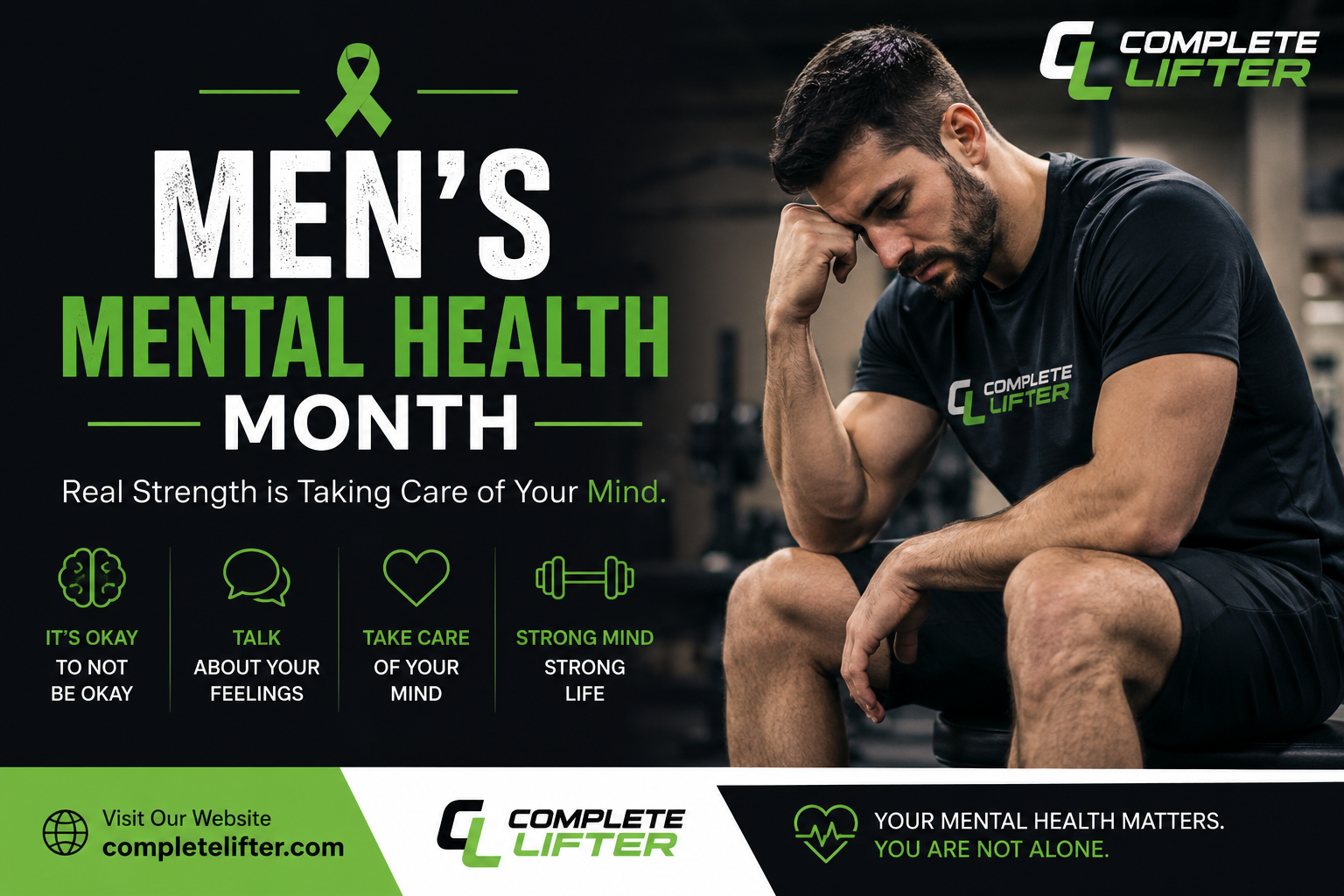
Every year, millions of men silently battle stress, anxiety, depression, loneliness, and emotional pain. Many smile through their struggles, believing they must always appear strong, fearless, and in control. Yet behind those smiles, countless stories remain untold.
Men’s Mental Month is more than an awareness campaign it’s a powerful reminder that mental health matters just as much as physical health. It encourages men to speak openly, seek support, and prioritize emotional well-being without fear of judgment.
In a world where men are often expected to “tough it out,” this month reminds us that true strength lies in asking for help, expressing emotions, and taking care of our mental health.
What Is Men’s Mental Health Month?
Men’s Mental Health Month is observed every June to raise awareness about the unique health challenges men face. It aims to reduce stigma, encourage open conversations, and promote access to health resources and support.
The campaign focuses on educating communities about issues such as:
- Depression
- Anxiety
- Stress
- Substance abuse
- Suicide prevention
- Emotional well-being
- Healthy coping strategies
The goal is simple: to create a society where men feel safe discussing their emotions and seeking professional help when needed.
Why Men’s Mental Health Matters
Mental health affects every aspect of life, including relationships, careers, physical health, and overall happiness. Yet many men delay or avoid seeking help due to social expectations, fear of appearing weak, or concerns about being misunderstood.
Ignoring mental health struggles can lead to:
- Chronic stress
- Burnout
- Relationship difficulties
- Reduced productivity
- Physical health problems
- Substance misuse
- Increased risk of depression and anxiety
Prioritizing mental well-being helps men lead healthier, more fulfilling lives.
Common Mental Health Challenges Men Face
While everyone experiences emotional struggles, men often encounter unique pressures that can affect their mental health.
1. Workplace Stress
Long working hours, financial responsibilities, and career pressures can leave men feeling overwhelmed. Balancing professional demands with personal life is a common challenge.
2. Depression
Depression in men doesn’t always look like sadness. It may appear as irritability, anger, fatigue, loss of motivation, or withdrawing from loved ones.
Signs may include:
- Persistent low mood
- Loss of interest in hobbies
- Difficulty concentrating
- Changes in sleep or appetite
- Feelings of hopelessness
Recognizing these signs early can make a significant difference.
3. Anxiety
Anxiety can affect men of all ages and may present as constant worry, restlessness, racing thoughts, or physical symptoms like headaches and muscle tension.
4. Relationship Challenges
Family responsibilities, parenting, marriage, and relationship conflicts can create emotional strain. Healthy communication and support are essential during difficult times.
5. Social Isolation
Many men have small social circles and may struggle to talk openly about their feelings. Loneliness can have a serious impact on mental health if left unaddressed.
Why Many Men Don’t Ask for Help
One of the biggest barriers to mental wellness is stigma.
Many men grow up hearing phrases like:
- “Be strong.”
- “Don’t cry.”
- “Handle it yourself.”
- “Real men don’t show emotions.”
These messages can make it difficult to seek help, even when support is desperately needed.
The truth is, asking for help is a sign of courage, not weakness.
Warning Signs That Should Never Be Ignored
Recognizing the signs of emotional distress is the first step toward healing.
Watch for:
- Persistent sadness
- Extreme mood changes
- Withdrawal from friends and family
- Difficulty sleeping
- Loss of energy
- Increased anger or irritability
- Changes in eating habits
- Loss of interest in activities
- Difficulty concentrating
- Thoughts of self-harm or suicide
If these symptoms persist, seeking professional support is an important and responsible step.
Simple Ways Men Can Improve Their Mental Health
Improving mental health doesn’t always require dramatic changes. Small, consistent habits can make a meaningful difference.
Stay Physically Active
Exercise helps reduce stress, improve mood, and boost confidence. Even a daily walk can support mental well-being.
Prioritize Quality Sleep
Aim for 7–9 hours of sleep each night. Good sleep helps regulate emotions and improve focus.
Eat a Balanced Diet
Nutritious foods support brain health and stable energy levels. Include fruits, vegetables, whole grains, lean proteins, and healthy fats.
Talk to Someone You Trust
Opening up to a friend, family member, or counselor can ease emotional burdens and provide valuable support.
Practice Mindfulness
Meditation, deep breathing, journaling, or spending time in nature can help reduce stress and improve emotional resilience.
Limit Alcohol and Substance Use
Using alcohol or drugs to cope with emotions may provide temporary relief but can worsen mental health over time.
How Families and Friends Can Help
Supporting the men in your life starts with compassion and understanding.
You can help by:
- Listening without judgment
- Encouraging open conversations
- Checking in regularly
- Respecting their feelings
- Suggesting professional support when needed
- Spending quality time together
Sometimes, simply asking, “How are you really doing?” can make a world of difference.
The Importance of Professional Support
Therapists, counselors, psychologists, and other mental health professionals provide tools and guidance to help people manage emotional challenges.
Seeking professional help can:
- Improve coping skills
- Reduce symptoms of anxiety and depression
- Strengthen relationships
- Build confidence
- Enhance overall quality of life
There is no shame in reaching out for support. Everyone deserves the opportunity to heal and thrive.
How to Observe Men’s Mental Health Month
You can make a positive impact by:
- Learning about men’s mental health
- Sharing educational resources
- Encouraging honest conversations
- Supporting mental health organizations
- Checking in with friends and loved ones
- Practicing self-care
- Speaking openly about emotional well-being
Awareness begins with conversation, and conversation can save lives.
Frequently Asked Questions
When is Men’s Mental Health Month?
Men’s Mental Health Month is observed every June, highlighting the importance of mental well-being and encouraging men to seek support when needed.
Why is Men’s Mental Health Month important?
It raises awareness about mental health challenges, reduces stigma, and promotes early intervention, education, and access to care.
How can men improve their mental health?
Healthy habits such as regular exercise, quality sleep, balanced nutrition, meaningful social connections, stress management, and professional support can improve overall mental well-being.
Is asking for help a sign of weakness?
No. Seeking help demonstrates self-awareness, courage, and a commitment to improving your health and quality of life.
Final Thoughts
Behind every strong man is a heart that feels, a mind that carries burdens, and a life filled with responsibilities, hopes, and challenges. Strength is not measured by how much pain you can hide but by your willingness to face it with honesty.
Men’s Mental Health Month reminds us that no one should have to struggle alone. Whether you’re facing stress, anxiety, depression, or simply feeling overwhelmed, your emotions are valid, and your well-being matters.
If you’re reading this, remember: it’s okay to talk, it’s okay to ask for help, and it’s okay to prioritize yourself. Healing doesn’t happen overnight, but every conversation, every small step, and every act of self-care brings you closer to a healthier, happier life.
You are stronger than your struggles, and your story deserves hope, support, and understanding.
Conclusion
Men’s Mental Health Month is an opportunity to break harmful stereotypes, encourage open conversations, and remind every man that seeking help is a sign of strength. By prioritizing mental wellness, building supportive relationships, and embracing healthy coping strategies, men can improve not only their own lives but also the lives of those around them. Together, we can create a future where mental health is valued, respected, and openly discussed every day of the year.
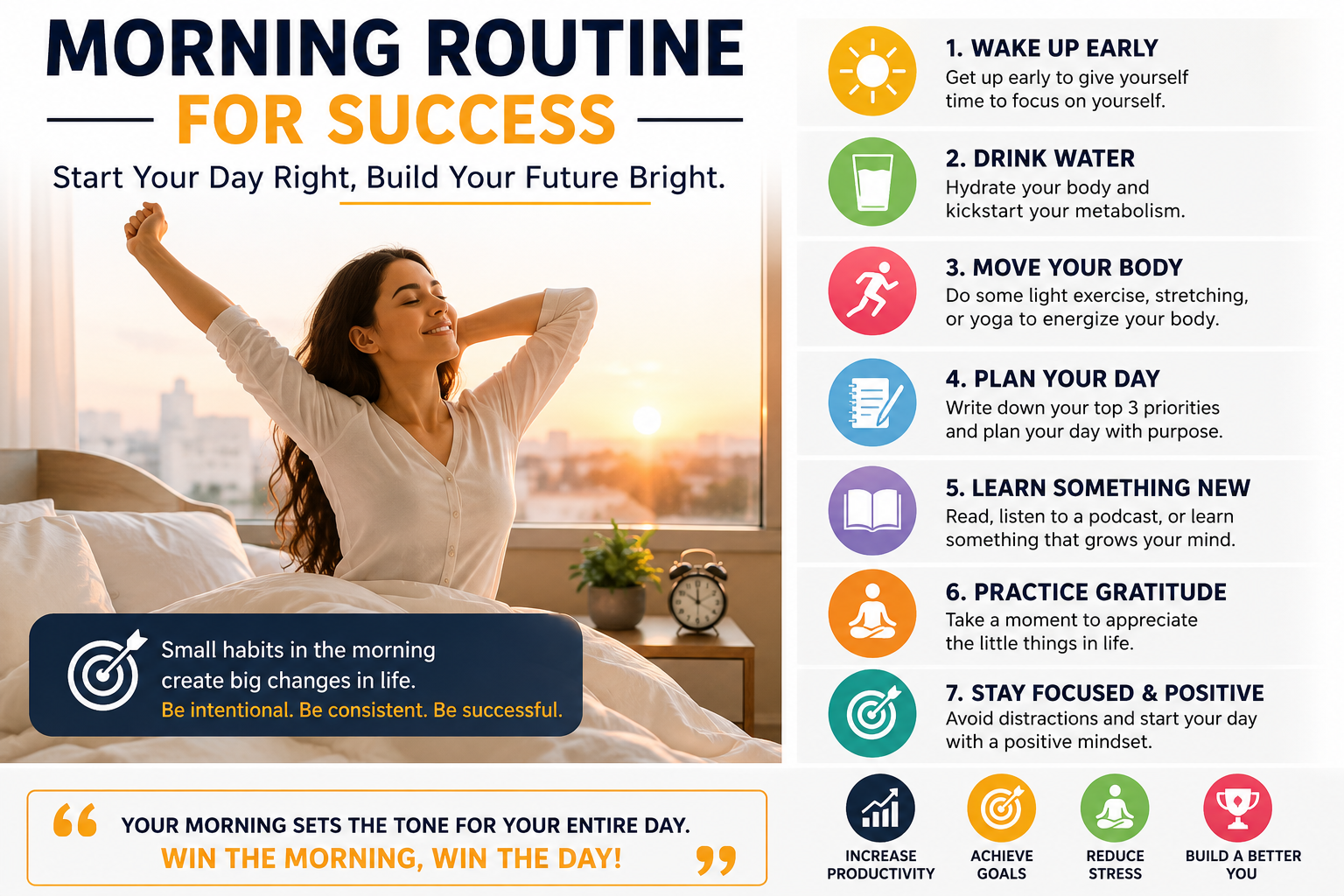
Every sunrise is a quiet reminder that life is giving you another chance. Another opportunity to dream bigger, work harder, and become a better version of yourself. Success doesn’t begin when you arrive at your destination—it begins the moment you open your eyes each morning.
The truth is, the way you spend the first hour of your day often determines how the rest of your day unfolds. A powerful morning routine for success isn’t about waking up at 4 AM or following someone else’s schedule. It’s about creating habits that energize your body, calm your mind, and prepare your heart for the challenges ahead.
Whether your goal is building a successful career, improving your health, growing your business, or simply finding more happiness, your mornings hold the key.
Why Your Morning Routine Matters
Your morning is the foundation of your day. If you begin your day feeling rushed, distracted, or overwhelmed, those emotions often follow you throughout the day.
On the other hand, when you wake up with purpose and intention, you gain control over your time instead of letting time control you.
A consistent morning routine helps you:
- Increase productivity
- Improve focus and concentration
- Boost physical energy
- Reduce stress and anxiety
- Build self-discipline
- Strengthen emotional resilience
- Develop healthy habits that last a lifetime
Success isn’t built in one extraordinary moment. It’s built through ordinary mornings repeated consistently.
1. Wake Up with Purpose
The moment your alarm rings, you have two choices: hit the snooze button or embrace the new day.
Successful people understand that every morning is a fresh beginning. Instead of seeing the alarm as an interruption, they see it as an invitation to grow.
You don’t have to wake up extremely early. What matters most is waking up consistently and giving yourself enough time to prepare without rushing.
Tips for Better Mornings
- Sleep 7–9 hours every night.
- Wake up at the same time daily.
- Avoid staying up late unnecessarily.
- Keep your phone away from your bed.
A peaceful morning begins the night before.
2. Start Your Day with Gratitude
Before checking notifications or thinking about your responsibilities, take a moment to appreciate what you already have.
Gratitude shifts your focus from what’s missing to what’s meaningful.
Write down three things you’re thankful for.
They could be:
- Your family
- Good health
- A supportive friend
- A new opportunity
- The simple gift of another day
When your heart is full of gratitude, your mind naturally becomes more positive.
3. Hydrate Your Body
After several hours of sleep, your body needs water more than coffee.
Drinking one or two glasses of water first thing in the morning helps:
- Wake up your metabolism
- Improve digestion
- Increase energy levels
- Support brain function
- Flush out toxins
Adding fresh lemon to your water can make it even more refreshing.
Healthy mornings begin with healthy hydration.
4. Move Your Body
Movement creates momentum.
You don’t need an expensive gym membership to feel strong and energized.
Spend 20–30 minutes doing activities such as:
- Stretching
- Walking
- Yoga
- Bodyweight exercises
- Light jogging
- Dancing
Exercise releases endorphins, often called the “feel-good hormones,” helping you face the day with confidence and optimism.
Remember, your body is your greatest investment. Treat it with care.
5. Feed Your Mind Before the World Does
Many people begin their mornings by scrolling through social media. Unfortunately, this fills the mind with distractions before it has a chance to focus.
Instead, spend your first few minutes learning something valuable.
Read:
- Personal development books
- Inspirational biographies
- Motivational articles
- Educational content
Even 10 minutes of learning every morning can change the direction of your life over time.
Knowledge grows quietly but transforms loudly.
6. Enjoy a Nutritious Breakfast
Your body deserves fuel that supports both your health and your goals.
A balanced breakfast keeps your energy stable throughout the morning.
Choose foods rich in:
- Protein
- Healthy fats
- Whole grains
- Fresh fruits
- Fiber
Healthy breakfast ideas include:
- Oatmeal with berries
- Eggs and whole-grain toast
- Greek yogurt with nuts
- Smoothies made with fruits and spinach
Avoid sugary breakfasts that lead to energy crashes later in the day.
7. Set Your Daily Goals
Without direction, even the busiest day can feel unproductive.
Take a few minutes each morning to write down your three most important tasks.
Ask yourself:
- What absolutely needs to get done today?
- What brings me closer to my long-term goals?
- What can I eliminate that doesn’t add value?
Clear goals reduce stress and improve productivity.
8. Practice Mindfulness
Life moves quickly, but your morning doesn’t have to.
Spend five to ten minutes in silence.
Practice:
- Deep breathing
- Meditation
- Prayer
- Quiet reflection
Mindfulness helps you remain calm even when life becomes chaotic.
Sometimes the greatest strength comes from simply slowing down.
9. Visualize Your Success
Every achievement begins as a thought.
Close your eyes for a few moments and imagine yourself achieving your biggest dreams.
Picture yourself:
- Reaching your fitness goals
- Building a successful business
- Speaking confidently
- Living a healthy lifestyle
- Creating financial freedom
Visualization strengthens belief, and belief fuels action.
10. Avoid Negative Inputs
Your morning mindset matters.
Avoid beginning the day with:
- Negative news
- Social media arguments
- Stressful emails
- Endless notifications
Protect your peace.
Fill your mind with hope, inspiration, and positivity instead.
11. Stay Consistent
The most successful people aren’t successful because they are perfect.
They succeed because they remain consistent.
Even if you only complete a few healthy habits every morning, repeating them daily creates powerful long-term results.
Small improvements every day eventually become extraordinary achievements.
12. Believe in Yourself
Perhaps the most important morning habit isn’t physical at all.
It’s believing that today has the potential to change your future.
Speak positive affirmations such as:
- I am capable.
- I am disciplined.
- I am growing every day.
- I can overcome challenges.
- My future is bright.
The words you repeat become the beliefs you live.
Never underestimate the power of believing in yourself.
Sample Morning Routine for Success
| Time | Activity |
|---|---|
| 6:00 AM | Wake up and drink water |
| 6:10 AM | Stretch or exercise |
| 6:30 AM | Meditation or prayer |
| 6:40 AM | Gratitude journaling |
| 6:50 AM | Read an inspiring book |
| 7:05 AM | Healthy breakfast |
| 7:20 AM | Plan daily goals |
| 7:30 AM | Begin your work with focus |
Common Mistakes That Ruin Your Morning
Avoid these habits if you want productive mornings:
- Hitting the snooze button repeatedly
- Skipping breakfast
- Staying up too late
- Starting the day with social media
- Ignoring exercise
- Forgetting to hydrate
- Beginning work without a plan
Every small habit matters.
Frequently Asked Questions
What is the best morning routine for success?
The best routine includes waking up consistently, drinking water, exercising, practicing gratitude, eating a healthy breakfast, setting daily goals, and limiting distractions.
How long should a morning routine be?
A morning routine can last anywhere from 30 minutes to two hours. The most important factor is consistency, not length.
Can a morning routine improve mental health?
Yes. A structured morning routine reduces stress, increases focus, improves mood, and creates emotional stability throughout the day.
Should I exercise every morning?
Light physical activity most mornings can improve energy, mood, and overall health. Choose activities that fit your lifestyle and fitness level.
Final Thoughts
Every successful life is built one morning at a time. You don’t need to change everything overnight. Start with one meaningful habit, then another, and let consistency shape your future.
There will be mornings when motivation feels distant, when comfort whispers louder than ambition, and when progress seems invisible. On those days, remember that success isn’t reserved for those who never struggle—it’s earned by those who keep showing up.
Your future self is created by the choices you make today. So wake up with gratitude, move with purpose, and believe in the incredible potential that lives within you.
The sun rises every morning without fail. Let your determination rise with it.
Conclusion
A powerful morning routine for success is more than a list of habits—it’s a commitment to becoming the person you’ve always wanted to be. By waking up intentionally, nourishing your body, strengthening your mindset, and focusing on your goals, you lay the foundation for lasting success. Remember, every great achievement begins with a single step, and every remarkable journey begins with one meaningful morning.
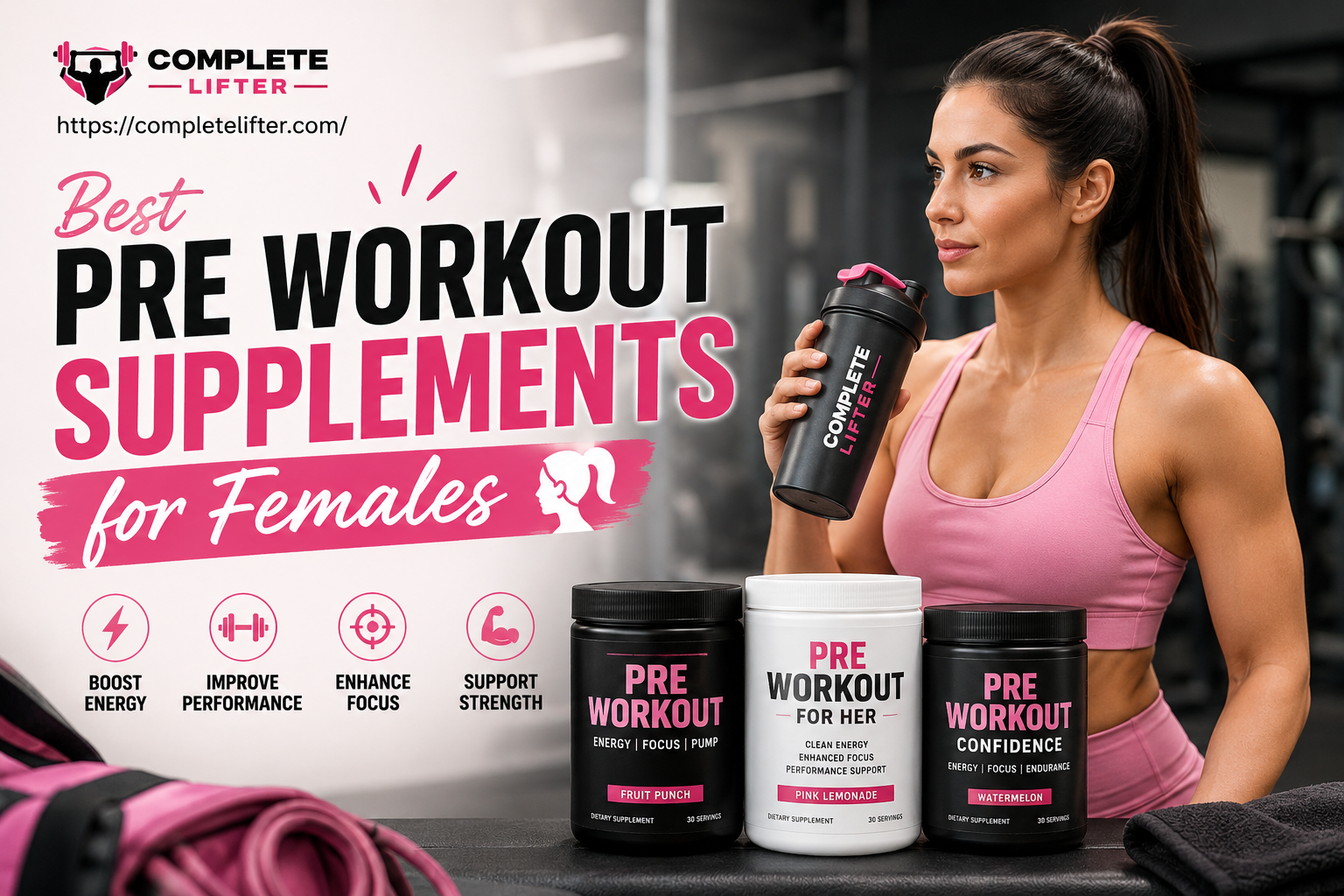
Finding the best pre workout supplements for females can make a remarkable difference in workout performance, endurance, and recovery. Whether the goal is weight loss, muscle toning, strength training, or improving athletic performance, a high-quality pre-workout supplement provides the energy and focus needed to perform at your highest level.
Women often have different nutritional needs than men, making it essential to choose a formula designed to support female fitness goals without unnecessary stimulants or excessive ingredients. This comprehensive guide explores everything you need to know before choosing the ideal pre-workout supplement.
What Is a Pre Workout Supplement?
A pre workout supplement is a nutritional formula taken approximately 20 to 45 minutes before exercise. These supplements are carefully designed to increase energy, improve mental focus, delay fatigue, and enhance overall physical performance during workouts.
Most pre-workout formulas combine performance-enhancing ingredients such as:
- Caffeine
- Beta-Alanine
- L-Citrulline
- Creatine
- L-Tyrosine
- Electrolytes
- B Vitamins
- Natural Plant Extracts
The right combination of these ingredients helps maximize workout efficiency while supporting long-term fitness progress.
Why Females Should Consider a Pre Workout Supplement
Many women avoid pre-workout supplements because they mistakenly believe these products are only intended for bodybuilders. In reality, women of every fitness level can benefit from using a properly formulated supplement.
Benefits include:
- Improved workout energy
- Better concentration
- Enhanced muscle endurance
- Increased calorie burn
- Greater strength output
- Reduced exercise fatigue
- Improved motivation
- Enhanced blood circulation
- Faster recovery between sets
Whether participating in cardio, CrossFit, weightlifting, yoga, HIIT, or endurance sports, the right supplement can improve overall training quality.
Key Ingredients in the Best Pre Workout Supplements for Females
1. Caffeine
Caffeine remains one of the most effective performance enhancers available.
Benefits include:
- Increased alertness
- Enhanced energy
- Improved endurance
- Greater fat oxidation
- Better exercise performance
Women who are sensitive to caffeine should consider products containing 100–150 mg, while experienced users may tolerate 200–300 mg.
2. L-Citrulline
L-Citrulline improves nitric oxide production, allowing blood vessels to widen and increase oxygen delivery to working muscles.
Benefits:
- Better muscle pumps
- Increased endurance
- Reduced fatigue
- Faster recovery
- Improved nutrient delivery
3. Beta-Alanine
Beta-Alanine helps reduce muscle fatigue during high-intensity exercise.
Benefits include:
- Longer workout duration
- Increased muscular endurance
- Delayed fatigue
- Better HIIT performance
A harmless tingling sensation may occur shortly after consumption.
4. Creatine Monohydrate
Creatine is one of the most extensively researched sports supplements available.
Benefits include:
- Increased strength
- Better muscle recovery
- Improved power output
- Lean muscle development
- Enhanced performance
Contrary to common myths, creatine does not cause unwanted bulk in women when used correctly.
5. B Vitamins
B-complex vitamins assist with converting food into usable energy.
Important vitamins include:
- Vitamin B6
- Vitamin B12
- Niacin
- Riboflavin
These nutrients support metabolism and reduce fatigue.
6. Electrolytes
Electrolytes help maintain hydration during intense exercise.
Key electrolytes:
- Sodium
- Potassium
- Magnesium
- Calcium
Proper hydration improves endurance and reduces muscle cramps.
7. L-Tyrosine
L-Tyrosine supports cognitive performance under physical stress.
Benefits:
- Improved focus
- Enhanced concentration
- Better mood
- Reduced mental fatigue
Benefits of Using the Best Pre Workout Supplements for Females
Women can experience numerous performance advantages.
More Energy
Pre-workout ingredients provide consistent energy throughout the workout without early fatigue.
Greater Fat Burning
Certain ingredients help increase metabolic rate, allowing the body to burn more calories during exercise.
Improved Endurance
Better stamina enables longer workouts with higher intensity.
Enhanced Focus
Mental clarity helps maintain proper exercise form and motivation.
Stronger Muscle Pumps
Improved blood flow increases nutrient delivery and muscle performance.
Better Strength
Consistent supplementation supports progressive overload during resistance training.
How to Choose the Best Pre Workout Supplement for Females
Not every product offers the same quality.
Consider these factors before purchasing.
Transparent Ingredient Label
Avoid proprietary blends that hide ingredient amounts.
Choose supplements that clearly list:
- Ingredient dosage
- Serving size
- Caffeine content
- Clinical dosages
Appropriate Caffeine Level
Select caffeine based on your tolerance.
| Experience Level | Recommended Caffeine |
|---|---|
| Beginner | 75–150 mg |
| Moderate | 150–200 mg |
| Advanced | 200–300 mg |
Minimal Artificial Ingredients
Look for products containing:
- Natural flavors
- Low sugar
- No unnecessary fillers
- Natural colors
Clinically Dosed Ingredients
Quality supplements provide research-backed dosages instead of tiny ineffective amounts.
Best Types of Pre Workout Supplements for Female Fitness Goals
For Weight Loss
Look for:
- Green tea extract
- Caffeine
- L-Carnitine
- Capsaicin
- Electrolytes
For Muscle Building
Choose supplements containing:
- Creatine
- Citrulline
- Beta-Alanine
- Essential Amino Acids
For Beginners
Low-stimulant formulas provide energy without causing jitters.
For Evening Workouts
Choose stimulant-free products featuring:
- Citrulline
- Beta-Alanine
- Creatine
- Electrolytes
For Endurance Training
Ideal ingredients include:
- Citrulline
- Beta-Alanine
- Electrolytes
- B Vitamins
Natural Pre Workout Alternatives
Some women prefer natural options.
Popular choices include:
- Black coffee
- Banana with peanut butter
- Oatmeal
- Beetroot juice
- Greek yogurt
- Coconut water
- Dates
- Honey on whole-grain toast
These foods provide carbohydrates and natural energy before training.
When Should Women Take a Pre Workout Supplement?
For optimal performance:
- Consume 20–45 minutes before exercise
- Drink at least 500 ml of water
- Avoid taking stimulant-based products close to bedtime
Consistency often produces better long-term results.
Who Should Avoid Pre Workout Supplements?
Consult a healthcare professional before use if you:
- Are pregnant
- Are breastfeeding
- Have high blood pressure
- Have heart conditions
- Are highly sensitive to caffeine
- Take medications that interact with stimulants
Common Side Effects
Some users may experience:
- Increased heart rate
- Mild tingling
- Jitters
- Digestive discomfort
- Difficulty sleeping if taken late
Most side effects are reduced by using the recommended serving size.
Tips for Getting the Best Results
To maximize benefits:
- Stay hydrated
- Follow the recommended dosage
- Maintain a balanced diet
- Prioritize quality sleep
- Exercise consistently
- Combine supplementation with progressive training
- Avoid taking multiple stimulant products together
Frequently Asked Questions
Can women take regular pre workout supplements?
Yes. However, formulas with moderate caffeine levels and transparent ingredient labels are often better suited for women.
Is pre workout safe for beginners?
Yes, beginners should start with half a serving to assess tolerance.
Does pre workout help with weight loss?
It supports weight loss indirectly by increasing workout intensity, calorie expenditure, and motivation. Sustainable fat loss still depends on maintaining a calorie deficit.
Can women take creatine?
Absolutely. Creatine is safe, well researched, and effective for increasing strength, power, and lean muscle development.
Should pre workout be taken every day?
Only on workout days unless the product specifically recommends daily use.
Final Thoughts
Choosing the best pre workout supplements for females involves selecting products with science-backed ingredients, appropriate caffeine levels, and transparent labels. The right formula can significantly improve energy, endurance, strength, and focus while supporting consistent progress toward fitness goals.
No supplement replaces a balanced diet, structured training program, and adequate recovery, but when combined with healthy habits, a quality pre-workout can help women train harder, recover more effectively, and achieve lasting results. Prioritize products with clinically effective dosages, stay hydrated, and use them responsibly to maximize every workout.
Conclusion
The best pre workout supplements for females are those that match your individual goals, training style, and tolerance to stimulants. Whether you’re aiming to lose weight, build lean muscle, improve endurance, or simply feel more energized in the gym, choosing a high-quality formula with proven ingredients can elevate your performance. Focus on consistency, proper nutrition, hydration, and smart supplementation to get the most from every workout and support long-term health and fitness success.
The term Complete Lifter represents much more than someone who simply lifts weights in a gym. It symbolizes a balanced athlete who focuses on strength, endurance, mobility, recovery, nutrition, and mental resilience. In today’s fast-paced world, many people chase quick fitness results, often neglecting critical aspects of long-term health. A complete lifter understands that true fitness is not built overnight. It is developed through consistency, discipline, and a commitment to continuous improvement.
Imagine building a house. You wouldn’t focus solely on the roof while ignoring the foundation. Fitness works in the same way. Strength training alone may help build muscle, but without proper nutrition, mobility work, cardiovascular conditioning, and recovery, overall performance remains limited. The complete lifter approach encourages individuals to create a strong foundation that supports every aspect of physical wellness. This mindset leads not only to better athletic performance but also to improved quality of life.
Many fitness enthusiasts discover that focusing exclusively on one area eventually creates weaknesses elsewhere. A bodybuilder may struggle with flexibility, while a runner might lack strength. The complete lifter philosophy bridges these gaps, creating a more capable, balanced, and healthy individual.
The Evolution of Strength Training
Strength training has evolved dramatically over the last few decades. Traditional gym culture often emphasized appearance over functionality. Many people trained purely for aesthetics, aiming to build larger muscles without considering overall athletic performance. Today, fitness science supports a more comprehensive approach that combines strength, endurance, flexibility, and recovery.
Modern athletes increasingly recognize the importance of functional movement patterns. Exercises such as squats, deadlifts, pull-ups, and presses remain foundational because they mimic natural human movements. These exercises improve coordination, balance, and real-world strength. As a result, complete lifters focus not only on how they look but also on how effectively their bodies perform.
Technology has also transformed training methodologies. Fitness tracking devices, recovery monitoring tools, and personalized nutrition plans provide unprecedented insight into performance optimization. Athletes can now track sleep quality, heart rate variability, workout intensity, and recovery status. This data-driven approach allows complete lifters to make smarter decisions and achieve sustainable progress over time.
Key Components of a Complete Lifter
Strength Development
Strength serves as the cornerstone of any complete fitness program. Building strength improves muscle mass, bone density, metabolic health, and physical confidence. Compound exercises remain highly effective because they engage multiple muscle groups simultaneously. Movements such as squats, bench presses, deadlifts, and overhead presses provide a strong foundation for long-term development.
Cardiovascular Fitness
A complete lifter understands that heart health is equally important. Cardiovascular training enhances endurance, improves circulation, and supports overall wellness. Whether through running, cycling, rowing, swimming, or high-intensity interval training, incorporating cardio creates a balanced fitness profile.
Mobility and Flexibility
Many individuals overlook mobility until pain or injury occurs. Flexibility and mobility allow joints to move efficiently through their full range of motion. Regular stretching, foam rolling, and mobility drills improve movement quality and reduce injury risk. A complete lifter prioritizes these practices to maintain long-term physical performance.
Mental Resilience
Physical strength means little without mental toughness. Fitness journeys inevitably include setbacks, plateaus, and challenges. Developing resilience allows individuals to maintain consistency despite obstacles. Mental discipline often separates successful athletes from those who abandon their goals prematurely.
Comparison of Fitness Approaches
| Fitness Focus | Strength | Endurance | Mobility | Recovery | Overall Balance |
|---|---|---|---|---|---|
| Bodybuilding Only | High | Low | Moderate | Moderate | Limited |
| Cardio Only | Low | High | Moderate | Moderate | Limited |
| Powerlifting | Very High | Low | Low | Moderate | Limited |
| Complete Lifter Approach | High | High | High | High | Excellent |
Building the Perfect Training Routine
Creating an effective training routine requires balancing multiple fitness components. Beginners should focus on mastering movement patterns before increasing training volume. Learning proper technique establishes a foundation that supports future progress while reducing injury risk.
Intermediate lifters benefit from structured progression models. Progressive overload remains one of the most reliable principles in fitness. Gradually increasing weight, repetitions, or training intensity forces the body to adapt and grow stronger. Tracking workouts helps ensure consistent improvement while preventing stagnation.
Advanced athletes often incorporate specialized training phases. These phases may focus on strength, hypertrophy, endurance, or athletic performance. Strategic periodization allows athletes to maximize gains while minimizing fatigue and overtraining risks. A complete lifter understands that intelligent programming often produces better results than simply working harder.
Nutrition for Complete Lifters
Nutrition fuels every aspect of performance. Without adequate nutrients, even the most effective training program will fail to deliver optimal results. Protein supports muscle repair and growth, carbohydrates provide energy, and healthy fats contribute to hormonal balance and overall health.
Macronutrient Overview
| Macronutrient | Primary Function | Common Sources |
| Protein | Muscle repair and growth | Chicken, fish, eggs, beans |
| Carbohydrates | Energy production | Rice, oats, fruits, potatoes |
| Fats | Hormone support | Avocados, nuts, olive oil |
Hydration plays an equally important role. Even mild dehydration can negatively affect strength, endurance, concentration, and recovery. Complete lifters prioritize consistent water intake throughout the day.
Recovery nutrition also deserves attention. Consuming balanced meals after training replenishes glycogen stores and accelerates muscle recovery. This strategy improves performance in subsequent workouts and supports long-term adaptation.
Recovery and Injury Prevention
Recovery is where progress truly occurs. During training, muscles experience microscopic damage. Recovery periods allow the body to repair and strengthen these tissues. Without sufficient rest, performance declines and injury risk increases.
Sleep represents one of the most powerful recovery tools available. Quality sleep supports hormone regulation, muscle repair, cognitive function, and immune health. Most adults benefit from seven to nine hours of sleep per night, especially when engaging in regular physical activity.
Mobility work further supports recovery by maintaining joint health and improving movement quality. Incorporating stretching sessions, yoga, or mobility circuits can significantly enhance overall athletic performance while reducing discomfort and stiffness.
Measuring Progress Effectively
Many people focus exclusively on scale weight when evaluating fitness progress. While body weight can provide useful information, it tells only part of the story. Complete lifters monitor multiple performance indicators to gain a more accurate understanding of progress.
Key metrics include strength improvements, body composition changes, endurance capacity, flexibility gains, and recovery quality. Progress photos, workout logs, and performance assessments often reveal improvements that a scale cannot capture.
Tracking performance creates motivation and accountability. Seeing measurable improvements reinforces positive habits and encourages long-term consistency. Fitness becomes less about chasing perfection and more about celebrating continuous growth.
Common Mistakes to Avoid
One of the most common mistakes is prioritizing intensity over consistency. Many individuals attempt extreme workout programs only to burn out within weeks. Sustainable progress results from consistent effort applied over months and years.
Another frequent error involves neglecting recovery. More training does not always produce better results. In fact, excessive training often hinders progress. Complete lifters recognize the importance of balancing effort with adequate recovery.
Poor nutrition, unrealistic expectations, and constant program hopping also limit success. Effective fitness journeys require patience and trust in the process. Progress may appear slow initially, but consistency compounds over time much like investing money in a long-term portfolio.
The Future of Complete Fitness Training
The future of fitness continues to move toward personalization. Advances in wearable technology, artificial intelligence, and performance analytics allow individuals to customize training and recovery strategies based on their unique needs.
Functional fitness, longevity-focused training, and holistic wellness practices are becoming increasingly popular. People are no longer interested solely in appearance. They want strength, energy, mobility, confidence, and health that lasts throughout life.
The complete lifter philosophy aligns perfectly with these evolving priorities. By combining strength, endurance, mobility, nutrition, and recovery, individuals create a sustainable approach that supports lifelong wellness and performance.
Conclusion
Becoming a Complete Lifter is not about achieving perfection. It is about developing balance across every aspect of fitness and health. Strength training, cardiovascular conditioning, mobility work, nutrition, recovery, and mental resilience all contribute to long-term success. When these elements work together, they create a powerful foundation for transformation.
Fitness is a journey rather than a destination. Every workout, healthy meal, recovery session, and positive decision builds momentum toward a stronger future. By embracing the complete lifter mindset, anyone can unlock their full potential and create lasting physical and mental growth.
FAQs
1. What is a complete lifter?
A complete lifter is someone who focuses on strength, endurance, mobility, recovery, nutrition, and mental resilience rather than only lifting weights.
2. How often should a complete lifter train?
Most complete lifters train between four and six days per week while incorporating proper recovery and rest days.
3. Is cardio necessary for strength athletes?
Yes. Cardiovascular training supports heart health, endurance, recovery, and overall fitness balance.
4. What is the most important factor for long-term fitness success?
Consistency remains the most important factor. Sustainable habits produce better results than extreme short-term efforts.
5. Can beginners follow the complete lifter approach?
Absolutely. Beginners often benefit the most because they develop balanced fitness habits from the very beginning.
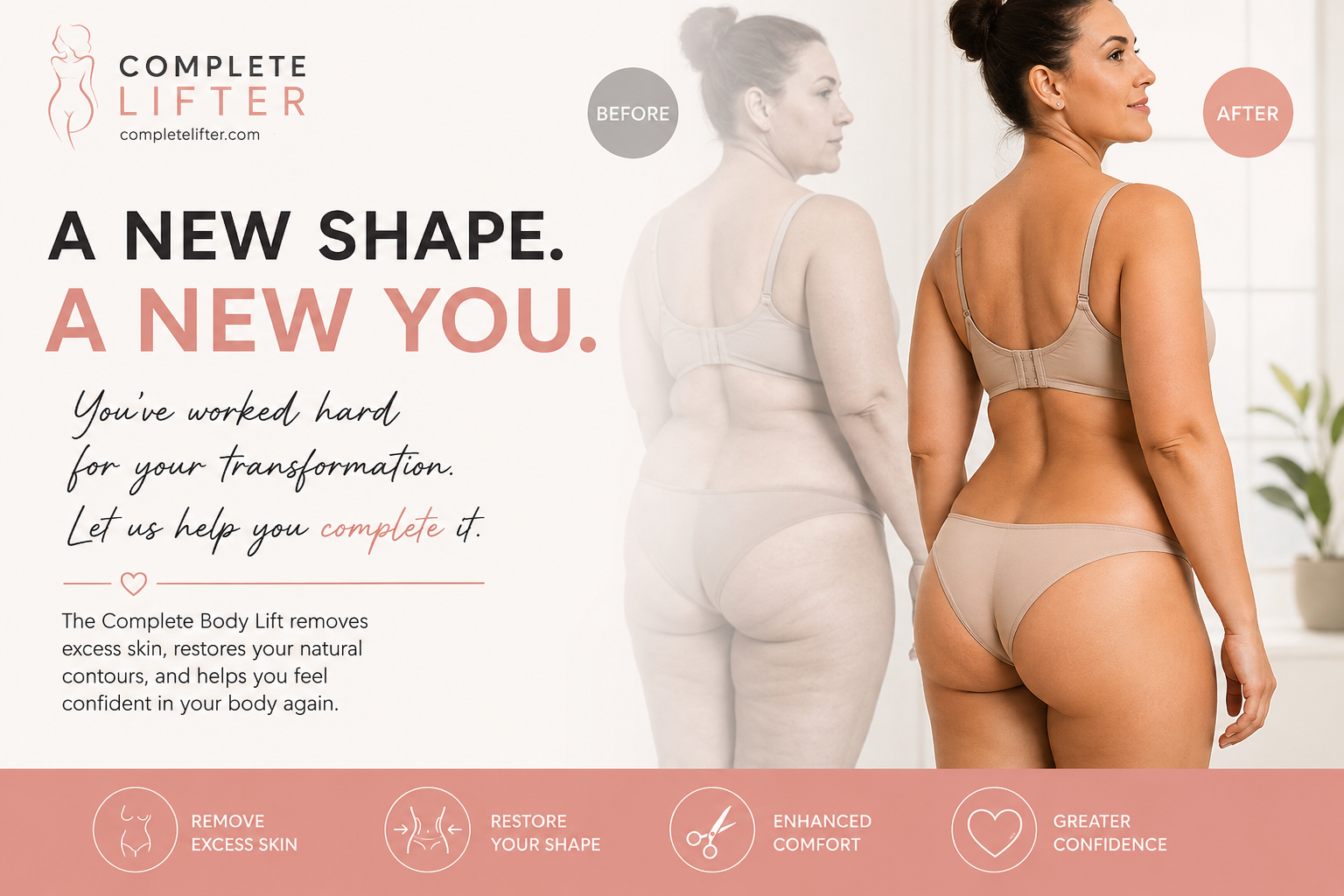
A complete body lift is one of the most comprehensive body contouring procedures available today. It is designed to remove excess skin and reshape the body after significant weight loss, pregnancy, or age-related skin laxity. For many people, losing a large amount of weight is a life-changing achievement, but it often leaves behind loose, hanging skin that exercise alone cannot eliminate. A complete body lift addresses these concerns by improving body proportions and creating a smoother, firmer appearance.
According to the American Society of Plastic Surgeons (ASPS), body lift surgery removes excess skin and fat while improving the tone of the underlying tissues. Results are visible immediately after surgery, although final results continue to develop over many months as swelling decreases and tissues settle.
What Is a Complete Body Lift?
A complete body lift is not a single operation but a customized combination of body contouring procedures performed to reshape multiple areas of the body. Depending on the patient’s needs, it may include lifting the abdomen, waist, buttocks, thighs, back, arms, and sometimes the breasts.
Unlike a standard tummy tuck, which mainly focuses on the abdomen, a complete body lift improves the body’s overall silhouette. Surgeons remove excess skin while tightening supportive tissues beneath the skin to create a more natural body contour. This procedure is especially popular among people who have lost 50 pounds or more through bariatric surgery or lifestyle changes.
How the Procedure Works
The surgery is performed under general anesthesia and can last anywhere from four to eight hours or longer, depending on the number of procedures being performed. During surgery, the surgeon carefully removes excess skin, reshapes fatty tissue, and tightens remaining tissues to improve body contour.
Common Areas Treated
- Abdomen
- Waist
- Buttocks
- Lower back
- Hips
- Outer thighs
- Arms
- Chest or breasts (when needed)
Who Is a Good Candidate?
The ideal candidate is someone whose weight has remained stable for at least six to twelve months. Surgeons generally recommend completing your weight-loss journey before considering surgery because future weight fluctuations can affect results.
Good candidates usually:
- Have significant loose skin
- Maintain a healthy lifestyle
- Do not smoke
- Have realistic expectations
- Are in good overall health
Individuals who have undergone bariatric surgery often benefit the most because excess skin can cause irritation, hygiene issues, and discomfort during physical activity.
Types of Complete Body Lift Procedures
Lower Body Lift
A lower body lift focuses on the abdomen, hips, buttocks, waist, and thighs. Many surgeons perform this as a circumferential or 360-degree procedure to improve the entire lower torso.
Upper Body Lift
This procedure targets loose skin around the upper back, chest, breasts, and upper arms.
Total Body Lift
A total body lift combines upper and lower body contouring, often in stages, to safely address multiple areas. Surgeons frequently recommend staged operations to reduce surgical risk and improve recovery.
Benefits of a Complete Body Lift
The benefits extend well beyond cosmetic improvement. Many patients report feeling more comfortable in clothing, exercising with greater ease, and experiencing improved self-confidence.
Some key advantages include:
| Benefit | Description |
| Better body contour | Removes excess loose skin |
| Improved comfort | Reduces skin irritation and chafing |
| Easier movement | Makes exercise more comfortable |
| Better hygiene | Eliminates skin folds prone to infections |
| Long-lasting results | Maintained with stable weight |
Many patients describe the procedure as the final step in their weight-loss transformation because it allows their appearance to better reflect the effort they’ve invested in improving their health.
Preparing for Surgery
Preparation begins several weeks before surgery. Your plastic surgeon will review your medical history, perform a physical examination, and may order blood tests or imaging studies.
Patients are commonly advised to:
- Stop smoking several weeks beforehand
- Maintain stable weight
- Avoid blood-thinning medications when medically appropriate
- Arrange transportation and home assistance
- Prepare recovery supplies before surgery
Being physically and mentally prepared significantly improves the recovery experience.
What Happens During the Procedure?
Every body lift is customized. After anesthesia is administered, carefully planned incisions allow the surgeon to remove excess skin while preserving healthy blood supply. The remaining tissue is repositioned and tightened before incisions are closed.
Temporary drainage tubes are commonly placed to reduce fluid buildup. Compression garments are usually worn afterward to minimize swelling and support healing.
Recovery Timeline
First Week
The first week is typically the most challenging. Swelling, bruising, and discomfort are expected. Walking is encouraged soon after surgery to reduce the risk of blood clots, but strenuous activities should be avoided.
First Month
Drain removal usually occurs within the first few weeks, depending on healing progress. Most patients gradually return to desk work within three to four weeks, although physically demanding jobs require additional recovery time.
Long-Term Healing
Most swelling improves within two months, while scars continue fading over one to two years. Maintaining a healthy lifestyle and stable weight helps preserve results for many years.
Risks and Possible Complications
Like any major surgery, a complete body lift carries risks.
Potential complications include:
- Infection
- Bleeding
- Delayed wound healing
- Seroma (fluid accumulation)
- Blood clots
- Noticeable scarring
- Temporary numbness
Following your surgeon’s postoperative instructions is one of the most effective ways to reduce these risks.
Cost of a Complete Body Lift
Costs vary significantly depending on:
| Factor | Impact on Cost |
| Geographic location | Higher in major cities |
| Surgeon’s experience | Board-certified specialists typically charge more |
| Hospital fees | Vary by facility |
| Anesthesia | Depends on surgery duration |
| Number of procedures | More procedures increase cost |
In many countries, cosmetic body lifts are not covered by insurance unless medically necessary to treat conditions such as chronic skin infections caused by excess skin.
Results and Long-Term Maintenance
Most patients notice dramatic improvements immediately after surgery, though swelling initially hides the final contour. The best results typically appear between six months and two years after surgery.
Long-lasting success depends on:
- Maintaining stable weight
- Regular exercise
- Healthy nutrition
- Avoiding smoking
- Following long-term medical advice
Patients who maintain these habits often enjoy their results for many years.
Conclusion
A complete body lift represents one of the most transformative procedures in modern body contouring surgery. For people who have worked hard to lose a significant amount of weight, it provides an opportunity to remove excess skin that diet and exercise cannot address. Although recovery requires patience and commitment, many patients consider the improvement in comfort, confidence, and quality of life well worth the effort.
Choosing an experienced, board-certified plastic surgeon, maintaining realistic expectations, and carefully following recovery instructions are the keys to achieving safe, satisfying, and long-lasting results.
Frequently Asked Questions
1. How long does a complete body lift take?
Most procedures last between 4 and 8 hours, although more extensive surgeries may take longer depending on the number of areas treated.
2. Is a complete body lift permanent?
Yes, the removed skin does not return. However, future weight gain, pregnancy, or natural aging can affect the appearance.
3. How painful is recovery?
Patients usually experience moderate discomfort during the first week, which is managed with prescribed medications. Pain generally improves as healing progresses.
4. Will there be visible scars?
Yes. Scars are permanent but typically fade considerably over one to two years with proper care.
5. When can I exercise again?
Light walking begins soon after surgery, while strenuous exercise is generally delayed for several weeks or months based on your surgeon’s recommendations.

Introduction
If you’ve ever wondered, “How many pushups per day should I do?”, you’re asking one of the most common fitness questions on the internet.
Pushups are simple, require no equipment, and can be done almost anywhere. Yet many people are unsure whether they should do 20, 50, or even 100 pushups a day.
The truth is that there isn’t a magic number that works for everyone.
The ideal number depends on your current fitness level, your goals, your recovery, and your consistency.
Whether your goal is to build muscle, lose weight, increase endurance, or simply become stronger, this guide will help you create a daily pushup routine that actually works.
By the end of this article, you’ll know exactly how many pushups you should do each day—and why.
Why Pushup Are One of the Best Bodyweight Exercises
Pushups have stood the test of time for a reason. They train multiple muscle groups at once, improve upper-body strength, and require no gym membership.
Unlike isolation exercises that target only one muscle, pushups activate several muscles simultaneously.
Muscles Worked During Pushups
| Primary Muscle | Role |
| Chest (Pectorals) | Main pushing muscle |
| Triceps | Straighten the arms |
| Front Shoulders | Stabilize and assist pushing |
| Core | Maintain body alignment |
| Lower Back | Support posture |
| Glutes | Stabilize the hips |
Because so many muscles work together, pushup are one of the most efficient bodyweight exercises available.
How Many Pushups Should Beginners Do?
If you’re new to exercise, don’t worry about hitting high numbers.
Focus on proper form instead.
Beginner Pushup Guide
| Fitness Level | Pushup Per Day |
| Complete Beginner | 10–20 |
| Beginner | 20–40 |
| Intermediate | 40–75 |
| Advanced | 75–150+ |
Instead of completing all your repetitions at once, divide them into smaller sets throughout the day.
For example:
- 5 sets of 10 pushup
- 4 sets of 15 pushup
- 10 sets of 10 pushup
Quality always matters more than quantity.
How Many Pushup in a Day to Build Muscle?
Many people believe they need heavy weights to build muscle.
While weights are excellent, pushups can also stimulate muscle growth when performed correctly.
For muscle building:
- Perform 3–5 sets
- Stay within 8–20 repetitions per set
- Stop 1–2 reps before failure
- Progress by increasing difficulty over time
Muscle-Building Pushup Plan
| Week | Sets | Reps |
| 1 | 3 | 10 |
| 2 | 3 | 12 |
| 3 | 4 | 12 |
| 4 | 4 | 15 |
Once regular pushups become easy, progress to decline, diamond, or weighted pushups.
How Many Pushup Per Day for Weight Loss?
Pushup alone won’t melt fat.
Fat loss comes from combining regular exercise with a calorie-controlled diet.
However, pushup increase calorie burn and help preserve muscle while losing weight.
Aim for:
- 30–80 pushup daily
- Full-body workouts 3–5 days weekly
- Daily walking or cardio
- High-protein nutrition
Is Doing 100 Pushups a Day Good?
This challenge has become popular online.
But is it actually effective?
Benefits
- Better muscular endurance
- Improved consistency
- Increased upper-body strength
- Enhanced discipline
Drawbacks
- Limited muscle growth after adaptation
- Increased risk of overuse injuries
- Neglects back and legs if done alone
If you choose this challenge, balance it with pulling exercises such as rows or pull-ups.
Common Pushup Mistakes
Many people perform pushups incorrectly.
Avoid these mistakes:
- Letting your hips sag
- Flaring elbows too wide
- Partial repetitions
- Rushing through each rep
- Looking straight ahead instead of keeping a neutral neck
Perfect technique produces better results than higher numbers.
Pushup Progression Plan
| Week | Daily Goal |
| Week 1 | 20 |
| Week 2 | 30 |
| Week 3 | 40 |
| Week 4 | 50 |
| Week 5 | 60 |
| Week 6 | 75 |
| Week 7 | 90 |
| Week 8 | 100 |
Only increase repetitions if your form remains strong.
Benefits of Doing Pushups Every Day
Regular pushups can help:
- Build upper-body strength
- Improve posture
- Increase muscular endurance
- Strengthen the core
- Improve shoulder stability
- Support bone health
- Boost confidence
- Require no equipment
- Save time
- Improve overall fitness
Sample 7-Day Pushup Routine
| Day | Workout |
| Monday | 30 Pushup |
| Tuesday | 35 Pushup |
| Wednesday | Rest or Light Mobility |
| Thursday | 40 Pushup |
| Friday | 45 Pushup |
| Saturday | 50 Pushup |
| Sunday | Recovery Walk |
Nutrition Tips
Your muscles need nutrients to recover.
Focus on:
- Lean protein
- Whole grains
- Healthy fats
- Fruits
- Vegetables
- Plenty of water
Sleep at least 7–9 hours each night to maximize recovery.
Frequently Asked Questions
Can I do pushups every day?
Yes, as long as you recover well and maintain proper form.
Are pushups enough for building muscle?
Pushups are effective, especially for beginners, but combining them with pulling and leg exercises creates a more balanced physique.
How long before I see results?
Most people notice improved strength within two to four weeks and visible changes after eight to twelve weeks of consistent training.
Should I do pushup in the morning or evening?
Either time works. The best time is the one you can consistently stick to.
Final Thoughts
There is no perfect number of pushups that fits everyone.
The best daily target depends on your current fitness level, recovery, and goals.
Instead of chasing impressive numbers, focus on consistent progress and excellent technique.
Twenty well-executed pushups are far more valuable than one hundred rushed repetitions.
Start where you are today, challenge yourself gradually, and stay patient.
Weeks from now, you’ll be stronger, healthier, and more confident—not because you searched for the perfect number, but because you committed to taking action every single day.
-
 Health5 months ago
Health Benefits of Daily Exercise: What Science Says
-

 Health2 weeks ago
15-Minute Beginner Home Workout Plan 2026: No Equipment Needed
-

 Health2 weeks ago
7 Best Dumbbell Exercises for Skinny Guys to Build Muscle at Home in 2026
-

 Health2 weeks ago
90-Day Muscle Gain Plan for Hardgainers
-

 Health2 weeks ago
How Many Eggs Equal One Scoop of Whey Protein?
-

 Health2 weeks ago
How to Gain Weight for Skinny Guys
-
 Health5 days ago
National Health Choices: A Complete Guide to Making Better Healthcare Decisions
-
 Health1 week ago
Best Chest and Triceps Workout